
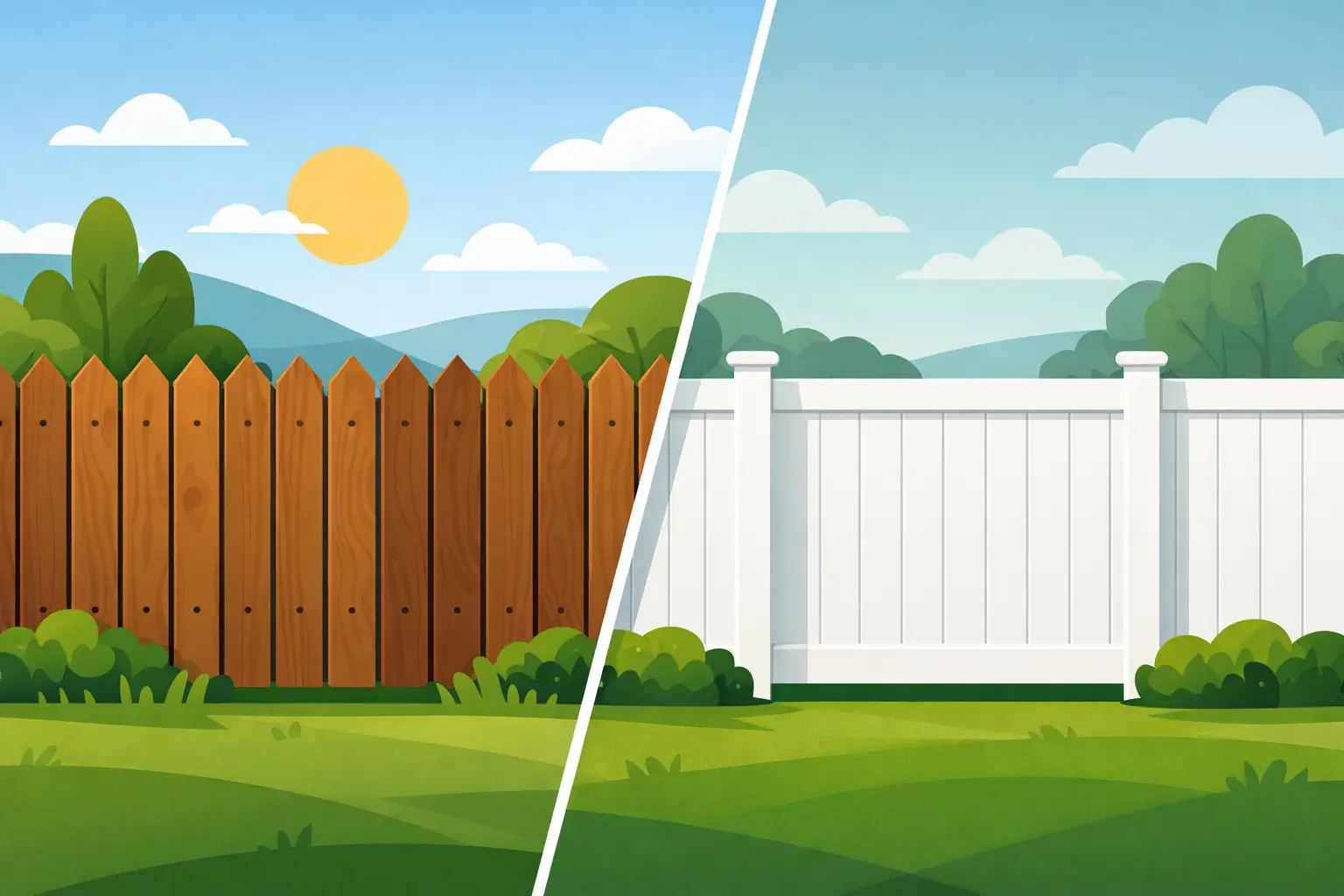
A fence usually looks simple from the street. Then you start pricing materials, thinking about privacy, weighing maintenance, and wondering how it will hold up through East Texas heat, rain, and humidity. That is where the wood fence vs vinyl fence decision gets real for homeowners. The right choice is not just about looks. It affects your budget, your weekend maintenance, and how your yard performs for years.
For many Tyler-area homeowners, the choice comes down to two priorities that do not always point in the same direction. Wood offers a classic, warm look and plenty of design flexibility. Vinyl offers lower upkeep and a cleaner long-term routine. Both can be good options, but they fit different homes, budgets, and expectations.
Wood fence vs vinyl fence: the biggest difference
The clearest difference between wood and vinyl is what you are signing up for after installation. Wood generally costs less upfront, but it asks more from you over time. Vinyl usually costs more at the beginning, but it reduces the need for regular staining, sealing, and repainting.
That makes this less of a style question and more of a lifestyle question. If you like the natural character of wood and do not mind periodic maintenance, wood can be a strong value. If you want a fence that stays consistent with minimal upkeep, vinyl often earns its higher initial price.
How wood fencing performs
Wood remains one of the most popular fencing materials for a reason. It looks at home in almost any neighborhood, it can be customized easily, and it gives homeowners a familiar sense of privacy and warmth that many people still prefer.
A wood fence can be built in different styles, heights, and finishes. It can be stained to highlight natural grain or painted for a more polished look. If a homeowner wants a traditional privacy fence, a decorative picket fence, or a custom layout to match landscaping, wood provides flexibility that is hard to beat.
That said, wood is more vulnerable to the elements. In East Texas, moisture, sun exposure, and temperature changes can wear it down over time. Boards may warp, split, fade, or rot if they are not maintained properly. Insects can also become a factor depending on the type of wood and the condition of the fence.
For some homeowners, that maintenance is worth it. A well-built and well-maintained wood fence can look excellent and serve a property for many years. But it is not a set-it-and-forget-it option.
Where wood tends to win
Wood often wins on upfront affordability and traditional appearance. If you are fencing a larger yard and need to stay within a tighter project budget, wood may make more sense. It also blends naturally with landscaped yards, mature trees, and homes that lean more classic than contemporary.
Repairs can be simpler too. If one picket or section gets damaged, it can often be replaced without rebuilding the entire fence line. That can be appealing if you want a practical, repairable material rather than one that may require matching factory-made panels.
Where wood can fall short
The trade-off is maintenance and lifespan consistency. A wood fence needs periodic staining, sealing, or painting to help protect it. Without that attention, weathering can show up faster than many homeowners expect. Even when maintained, wood can age unevenly depending on shade, drainage, sprinkler exposure, and soil conditions.
If your yard already keeps you busy, adding another outdoor maintenance task may not be what you want.
How vinyl fencing performs
Vinyl fencing appeals to homeowners who want a clean appearance and less long-term upkeep. It does not need staining or painting, and it generally holds its color better over time than painted wood. For busy families or homeowners planning for long-term convenience, that can be a major advantage.
Vinyl also resists many of the issues that make wood harder to maintain. It does not rot, it is not vulnerable to termites in the same way, and normal cleaning is usually much simpler. In many cases, occasional washing is enough to keep it looking sharp.
This lower-maintenance profile is often the main reason homeowners choose vinyl. They are not just buying a fence. They are buying back time and reducing future upkeep costs.
Where vinyl tends to win
Vinyl usually wins in maintenance, consistency, and long-term ease. Its appearance stays more uniform, and homeowners who want a polished look without routine refinishing often prefer it. If you plan to stay in your home for many years, vinyl can make sense as a long-view investment.
It can also be a strong fit for families who want privacy fencing that continues to look neat with less effort. For some households, especially those balancing work, kids, and property upkeep, that simplicity matters as much as the fence itself.
Where vinyl can fall short
The first drawback is price. Vinyl usually costs more upfront than wood, and that difference can be significant on larger properties. It also does not offer the same natural texture or character as real wood. Some homeowners like the clean, uniform look. Others feel it can look less warm or less custom.
Repairs can also be less forgiving in some cases. If a section cracks or suffers impact damage, replacement may depend on product availability and color matching. And while vinyl is durable, not every vinyl product is equal. Lower-quality materials can become brittle or less attractive over time.
Cost now versus cost later
When homeowners compare wood fence vs vinyl fence, the pricing conversation usually starts with installation and ends with ownership. Wood is often easier on the front end. Vinyl often reduces costs on the back end.
That means the better value depends on how long you expect to stay in the home and how much maintenance you are realistically willing to handle. If you need a fence now and want to manage project costs carefully, wood may be the right move. If you would rather spend more once and deal with less upkeep later, vinyl may be worth the premium.
There is also the question of curb appeal. A fence is part of the whole property experience, not a standalone feature. If your fencing project is part of a bigger outdoor upgrade that includes landscaping, drainage work, or hardscaping, it helps to think about how the material supports the overall look and long-term maintenance plan.
Which looks better?
This one depends heavily on the home.
Wood usually has the edge if you want warmth, texture, and a more natural appearance. It tends to complement established neighborhoods, shaded yards, and homes with traditional architecture. It can also be customized more easily if you want a specific stain color, trim detail, or design style.
Vinyl tends to suit homeowners who prefer a crisp, neat appearance and visual consistency. It can look especially clean around newer homes, pool areas, and backyards where a low-maintenance finish is part of the goal.
Neither is automatically better looking. The better-looking fence is the one that fits the house, the lot, and the level of upkeep the owner will actually maintain.
What works best in East Texas?
East Texas weather makes material choice more than a cosmetic decision. Humidity, strong sun, heavy rain, and shifting ground conditions can all affect fencing performance. That is why installation quality matters just as much as material selection.
Wood can perform well here, but it needs proper treatment and ongoing care. Drainage around the fence line matters. Post setting matters. So does choosing the right wood and applying protective finishes at the right intervals.
Vinyl avoids some moisture-related concerns, but it still needs quality installation to handle movement, wind, and everyday wear. A fence that is poorly planned or installed can disappoint no matter what it is made from.
For homeowners in Tyler and surrounding communities, the smartest approach is usually to choose the material that matches both the property and the owner’s maintenance habits. A beautiful fence only stays an asset if it fits real life.
How to choose between wood fence vs vinyl fence
If your top priority is lower upfront cost and a natural, traditional look, wood is often the better fit. If your top priority is lower maintenance and long-term convenience, vinyl usually makes more sense.
If you are still undecided, ask yourself a few practical questions. Are you comfortable staining or sealing a fence every few years? Do you want the look of real wood badly enough to maintain it? Are you planning to stay in the home long enough for vinyl’s lower upkeep to pay off? Is this fence part of a broader yard transformation where style consistency matters?
Those answers usually point homeowners in the right direction faster than generic pros and cons.
At Cullz Outdoor LLC, we see this choice come up often because fencing is rarely just about marking a boundary. It is about privacy, curb appeal, security, and making the whole outdoor space feel more finished and functional. The best fence is the one that supports how you actually use your property.
A good fence should make your yard feel more complete every time you pull into the driveway or step into the backyard. If you choose with your budget, maintenance comfort, and home style in mind, you will feel better about the decision long after installation day.