
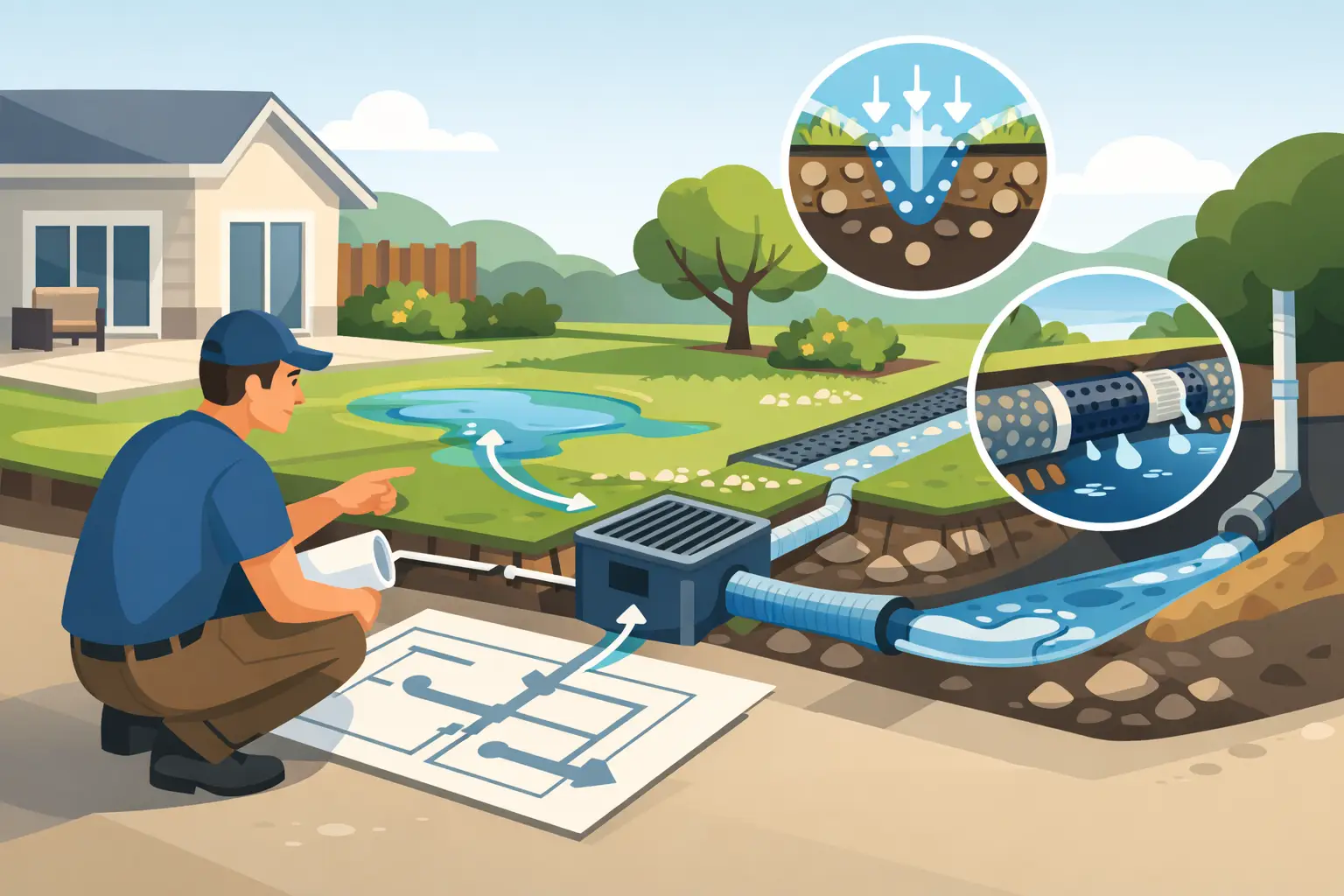
A backyard that stays soggy for days after a normal East Texas rain is not just annoying. It can kill grass, stain hardscapes, weaken fences, create mosquito problems, and slowly push water toward your home. A good backyard drainage planning guide starts with one simple idea: fix the way water moves across your property before it turns into a bigger and more expensive problem.
In Tyler and surrounding East Texas communities, drainage issues are common because soil conditions, heavy rain events, and changing yard elevations can all work against you. Some properties need a simple grading adjustment. Others need a more complete solution that ties together drainage, landscaping, retaining walls, and hardscape design. The right plan depends on what your yard is doing now, not what worked at someone else’s house.
What a backyard drainage planning guide should help you answer
The goal is not just to get rid of standing water. The real goal is to control where water goes, how fast it moves, and what it affects along the way. That means your drainage plan should answer a few practical questions. Where does water collect first? Where can it safely discharge? Is the problem on the surface, below the surface, or both?
It should also help you look beyond the obvious wet spots. A puddle in the lawn may be the visible symptom, but the cause could be a blocked flow path, a low area near a patio, runoff from a neighboring slope, or downspouts dumping too much water in one place. Planning matters because drainage problems are often connected.
Start by reading the yard after a rain
The best time to evaluate backyard drainage is shortly after rainfall. Walk the property and look for standing water, muddy sections, erosion channels, mulch washout, and areas where grass is thinning. Pay close attention to fence lines, the base of retaining walls, around patios, near HVAC pads, and anywhere water is moving toward the foundation.
If you do not want to wait for rain, a hose test can still reveal a lot. Run water in problem areas and watch how it behaves. You are trying to see whether water soaks in, sits on top, or starts traveling in an unwanted direction.
Take notes and photos from multiple angles. This is especially helpful if the issue changes from season to season. A yard that struggles in winter may behave differently in midsummer, and a good plan needs to account for those patterns.
Look at slope before you look at products
Many homeowners start by searching for a drain or pipe, but drainage products only work well when the grading supports them. If the yard slopes back toward the house, or if one low pocket traps water with no outlet, the system is already working against you.
Even a subtle grading issue can cause major frustration. A few inches of wrong elevation across a patio edge or lawn section can keep water from moving where it should. That is why planning usually begins with the shape of the yard, then moves to the tools needed to support that shape.
Common drainage problems in East Texas backyards
Clay-heavy soil is one of the biggest challenges in this region. It drains slowly, compacts easily, and can hold water near the surface longer than homeowners expect. That means even light grading issues can become obvious after a moderate storm.
Another common issue is runoff concentration. A roof may dump thousands of gallons of water over time into a small area through downspouts. If that water lands near planting beds, patios, or a fence line, it can quickly create erosion and saturation problems.
Some yards also have layered problems. For example, a homeowner may have a low area in the lawn, plus a patio that sheds water the wrong way, plus a retaining wall with poor drainage behind it. In those cases, installing one fix in isolation often leads to disappointment. The plan has to connect the whole system.
Choosing the right backyard drainage solution
There is no single best drainage fix for every property. The right choice depends on yard layout, soil conditions, budget, and how you use the space.
Surface drains work well where water collects in a predictable spot, such as beside a patio or at the bottom of a slope. French drains can help intercept and redirect subsurface or slow-moving groundwater, especially in areas that stay wet below the surface. Channel drains are often useful near hardscapes where water runs across concrete or pavers and needs to be captured quickly.
Sometimes the best answer is simpler than homeowners expect. Regrading a lawn section, extending downspouts, adding a swale, or reshaping planting beds may solve the problem without a more extensive drain installation. On the other hand, if the yard has multiple low areas or structural features, a complete drainage system may be the smarter long-term investment.
When retaining walls and drainage need to work together
Retaining walls can improve both function and appearance, but they must be planned with drainage in mind. A wall that holds back soil also holds back water pressure if there is no proper relief. That can shorten the life of the wall and create soggy conditions nearby.
If your backyard includes a slope that needs support, drainage should be built into the wall design from the beginning. This is one reason a full-service outdoor contractor can be valuable. The drainage, grading, and structural elements need to support each other instead of being treated as separate projects.
Plan for discharge, not just collection
A drain that collects water but has nowhere safe to send it is only half a solution. One of the most overlooked parts of backyard planning is the discharge point. Water needs a clear destination that does not create a new issue elsewhere on the property.
That may mean routing water toward a lower part of the yard, a suitable outlet area, or another approved drainage path. What matters is that the discharge is legal, practical, and stable. Sending water toward a neighbor’s property or onto a walkway can create a different problem than the one you started with.
This is also where professional planning helps. What looks like a good outlet on the surface may not hold up during heavier storms. A drainage system should be designed for more than ideal conditions.
Balance function with how you want to use the yard
Drainage planning should improve your backyard, not make it feel like a utility zone. Homeowners usually want a yard that drains better and looks better. That means the plan should consider lawn restoration, bed design, hardscape flow, fence protection, and how the space feels once the work is done.
For example, a swale may be effective, but it needs to fit the yard layout and not interfere with play space or entertaining areas. A visible drain may be necessary near a patio, but it should be placed and finished cleanly. The best results come from treating drainage as part of the overall outdoor design rather than as a patch job.
That approach is especially helpful if you are already thinking about landscaping, a new fence, patio work, or a retaining wall. Combining improvements can save time, reduce rework, and create a more polished final result.
Signs it is time to bring in a professional
Some drainage issues are straightforward. Others involve enough variables that guessing gets expensive. If water is moving toward your home, collecting near structures, damaging existing improvements, or returning after past fixes, it is usually time for a professional evaluation.
The same goes for yards with major elevation changes, repeat erosion, wall pressure concerns, or multiple problem areas. A professional can identify whether the issue is grading, runoff volume, soil behavior, drainage design, or a combination of all four.
Cullz Outdoor LLC works with homeowners who want practical solutions that improve both performance and appearance. That matters because most people are not trying to solve one isolated drainage problem. They want a backyard that is easier to maintain, more usable after rain, and better protected over time.
What to expect from a smart drainage plan
A solid plan should explain the problem clearly, recommend the right solution for that specific yard, and show how the work fits with the rest of the property. It should not rely on one-size-fits-all language or push an overly complex install where a simpler correction would do the job.
You should also expect some honest trade-offs. A lower-cost fix may improve conditions without solving every issue. A more complete system may cost more upfront but reduce future maintenance and protect nearby improvements. The best plan is the one that fits your property, your priorities, and the way you actually use your yard.
A dry backyard is not always the goal. A controlled backyard is. When water has a path, your lawn has a better chance, your hardscapes last longer, and your outdoor space becomes easier to enjoy after the next storm instead of harder to deal with.