
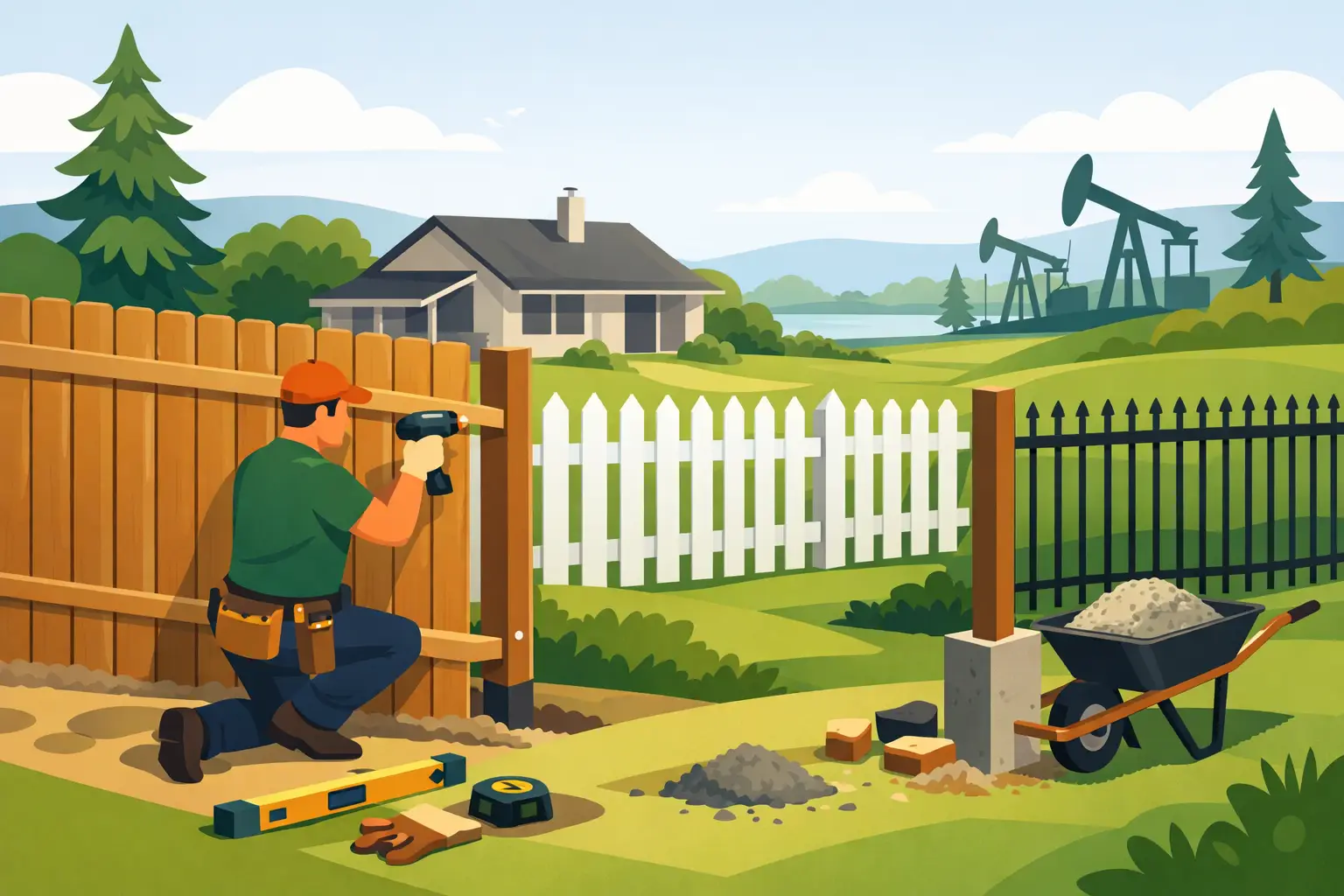
A fence can make a Tyler backyard feel private, secure, and ready for everyday life. But a great result starts long before the first post goes into the ground. This residential fence installation guide helps East Texas homeowners make informed choices about layout, materials, drainage, and installation so the finished fence looks right and holds up over time.
Start With What Your Fence Needs to Do
The best fence for one property may be the wrong choice for the house next door. Begin by deciding what matters most: privacy from nearby homes, a secure space for children or pets, a clearer property boundary, improved curb appeal, or a combination of all four.
A six-foot privacy fence is often a practical choice for backyards where homeowners want more separation from neighbors. A shorter decorative fence may work better along the front or side yard, where visibility and curb appeal matter more. If you have a dog, gate placement, latch hardware, and the gap below the fence deserve just as much attention as the fence style itself.
Think about how the yard is used now and how you want to use it later. A gate that seems convenient today can become a problem if you plan to add a patio, pool, storage shed, retaining wall, or expanded landscaping. Planning the fence as part of the full outdoor space prevents expensive adjustments later.
Residential Fence Installation Guide: Plan Before You Dig
A fence line is not always the same as a property line. Before construction starts, review your survey, deed information, and any neighborhood or homeowners association requirements. If the boundary is unclear, a professional survey is the safest way to avoid placing a fence on a neighbor’s property.
Local rules can also affect fence height, materials, and placement. Corner lots may have visibility requirements near streets and driveways. Some neighborhoods require approval before work begins, particularly for front-yard fencing or specific styles and colors. Taking care of these details early keeps a straightforward project from becoming a frustrating one.
Utility safety is equally important. Request utility marking before digging post holes. Underground electric, gas, water, cable, or communication lines may cross areas that look clear from the surface. Marking services help identify public utilities, but private lines for irrigation, landscape lighting, or outbuildings may need separate attention.
Talk with adjacent neighbors before installation when possible. You do not need permission to build entirely on your property, but a quick conversation can prevent confusion about the fence location, finished side, and access during construction. It is a simple step that supports good neighbor relationships.
Choose a Material That Fits Your Yard
Wood remains a popular choice for East Texas homes because it offers a warm, classic look and can be built in many styles. Cedar is valued for its natural appearance and resistance to decay, while pressure-treated pine is often a budget-conscious option. Wood fencing does require maintenance, especially in humid conditions. Staining, sealing, and occasional board replacement help it stay attractive and extend its service life.
Vinyl fencing offers a clean, uniform appearance with lower routine maintenance. It will not rot like wood, but it can have a higher upfront cost and fewer customization options. Heat, impact, and the quality of the installation all affect long-term performance.
Metal fencing, including ornamental steel or aluminum, works well when homeowners want security, visibility, and a more open feel. It is a strong choice around pools, landscaped front yards, and properties with a view worth preserving. However, it does not provide privacy unless it is paired with landscaping or privacy panels.
Chain-link fencing is practical for large yards, pet areas, and utility spaces. Modern options with darker coatings can blend more naturally into the landscape than traditional galvanized metal. It is usually one of the more economical choices, though it offers less privacy and a different visual style than wood or ornamental fencing.
Material matters, but installation quality matters just as much. Even premium fence boards cannot make up for shallow posts, poor drainage, weak gates, or an uneven layout.
Account for East Texas Soil and Drainage
East Texas weather puts fences through real work. Heavy rain, humidity, changing temperatures, and clay-rich soil can all affect posts and panels. Soil that expands when wet and contracts during dry periods may cause posts to shift if they are not installed at the right depth with proper support.
Drainage deserves special attention before the fence is built. Water should move away from the home and should not repeatedly collect against fence posts. A fence installed along a low, soggy section of the yard may need grading, a drainage solution, or a small change in layout to avoid ongoing moisture problems.
Do not use a fence to block the natural path of runoff without a plan. If water regularly flows through a side yard or along the back property line, solid fencing can trap debris or redirect water toward an area that was previously dry. In some cases, a small clearance at the bottom of the fence, appropriate grading, or drainage improvements can protect both the fence and the yard.
This is where a full-service outdoor perspective is valuable. Fence work often connects to landscaping, drainage, retaining walls, and lawn restoration. Addressing the underlying site conditions can protect the investment instead of simply covering up the problem.
Design the Layout Around Real Life
Fence design is more than selecting a panel pattern. Consider sight lines from your kitchen, patio, driveway, and neighboring homes. A privacy fence can create a comfortable backyard retreat, but it can also make a smaller yard feel enclosed if every section is tall and solid.
Gates deserve careful planning because they get more use than any other part of the fence. A standard walk gate is helpful for taking out trash or accessing a side yard. A wider double gate may be needed for lawn equipment, trailers, future construction, or backyard deliveries. Place gates where they support how you actually move through the property, not just where there happens to be an opening in the fence line.
Most homeowners also prefer the finished side of the fence to face outward toward the street or neighbor. This is often required by neighborhood guidelines, and it gives the property a more polished appearance from every angle. Ask about this before installation, especially if the fence will connect to an existing structure or shared boundary.
What Quality Fence Installation Looks Like
A durable fence begins with a clearly marked, level layout. Installers should confirm corners, gate locations, grade changes, and transition points before setting posts. This early work is what creates straight lines and balanced spacing once the project is complete.
Posts need to be deep enough for the fence height, soil conditions, and expected load. Gate posts often need additional support because they carry repeated weight and movement. Proper concrete placement and curing help secure posts, while accurate alignment keeps panels from looking wavy or uneven.
On sloped yards, the fence may follow the ground in a stepped pattern or be contoured to maintain a closer line to the grade. Each approach has a different look. Stepping creates crisp, level panels, while a contoured fence can reduce gaps below the boards. The right choice depends on the slope, fence style, and need to contain pets.
A professional final walkthrough should check gate swing, latch operation, post alignment, panel stability, and overall appearance. It is also the right time to discuss maintenance and any areas where new landscaping, mulch, or drainage improvements should be kept away from the fence base.
Know When to Call a Professional
A straightforward run of fencing on level ground may look like a manageable weekend project. Yet many fence problems begin with conditions that are easy to underestimate: unclear property lines, a steep grade, drainage issues, large gates, rocky soil, tree roots, or an existing retaining wall.
Hiring a local fence contractor can save time and reduce the risk of costly corrections. Ask for a clear estimate that identifies materials, fence height, gate count, demolition of old fencing if needed, and site-specific concerns. Competitive pricing should still include the details that make a fence dependable, not just the lowest number on paper.
Cullz Outdoor LLC helps homeowners in Tyler and surrounding East Texas communities plan fencing that works with the rest of the property. Whether the project calls for privacy, pet containment, curb appeal, or a better backyard layout, a customized estimate gives you a practical starting point.
Your fence should feel like it has always belonged in the yard. With the right plan, sound installation, and attention to drainage and daily use, it can become the boundary that makes the whole outdoor space more comfortable to enjoy.
Leave a Reply