
A bare yard can make an otherwise well-kept home feel unfinished, especially when the rest of the landscaping is ready to enjoy. The sod versus seed lawn decision comes down to more than wanting green grass quickly. In Tyler and across East Texas, your soil, shade, drainage, budget, and willingness to maintain a new lawn all affect which option will serve your property best.
Sod delivers an immediate visual transformation, while seed costs less upfront and gives you more flexibility in certain situations. Neither is automatically the right answer for every yard. The best choice is the one that fits your property and gives the grass a realistic chance to establish strong roots.
Sod Versus Seed Lawn: The Main Difference
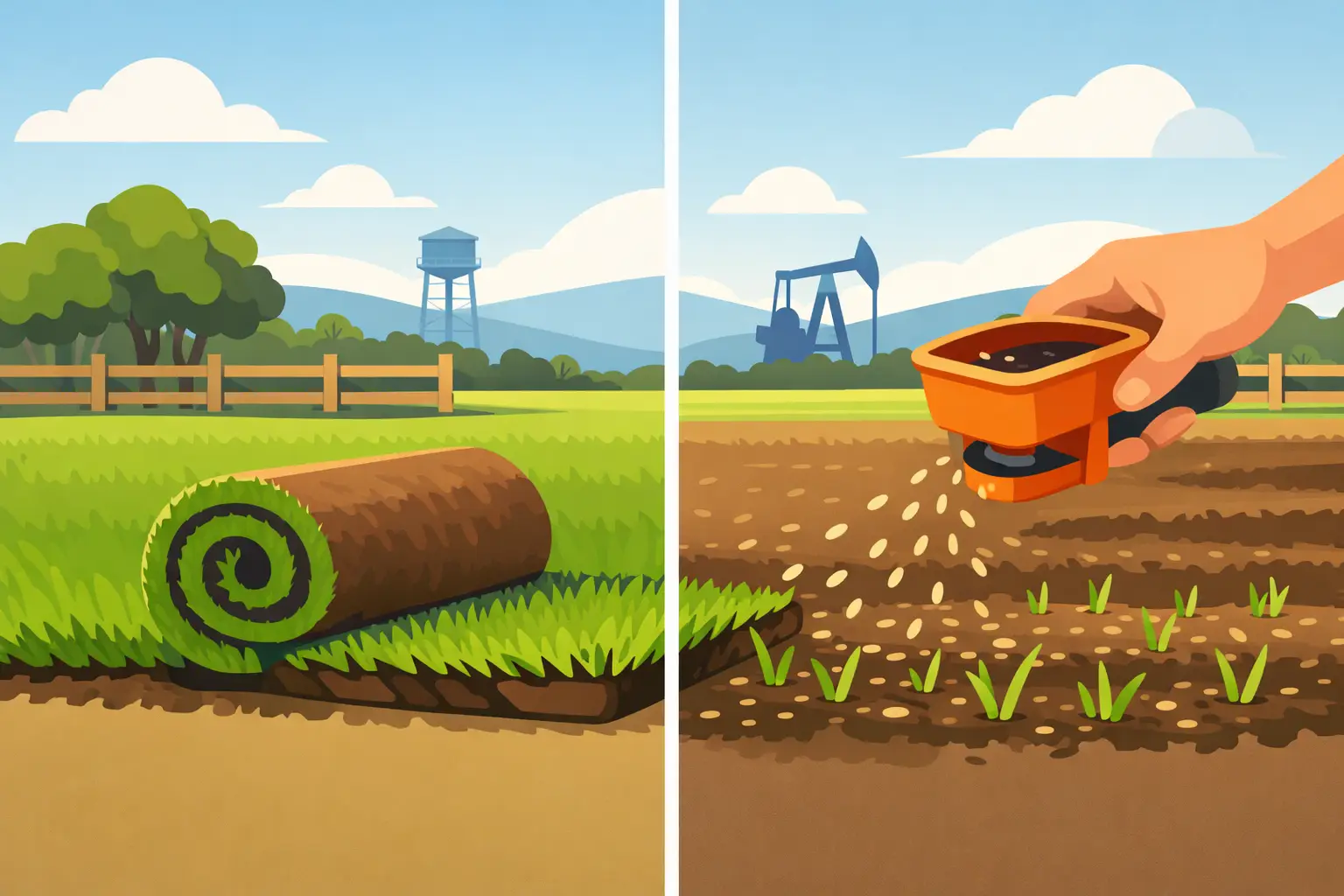
Sod is mature grass that has been professionally grown, cut into rolls or squares, and installed over prepared soil. Once it is laid and watered correctly, your yard looks green right away. The roots still need time to connect with the soil beneath it, but the surface is already covered.
Seed starts from the beginning. Grass seed is spread over prepared soil, kept consistently moist, and allowed to germinate and grow. It requires more patience, and the lawn can look thin or uneven during establishment. The trade-off is lower material cost and, in some cases, a broader selection of grass varieties.
For many East Texas homeowners, the choice is shaped by timing. If you need a presentable lawn after a landscaping project, retaining wall installation, drainage repair, or new fence construction, sod is often the more practical route. If the area is large, the budget is tight, and conditions are favorable for germination, seed may make sense.
When Sod Is the Better Choice
Sod is a strong option when curb appeal and speed matter. It can turn exposed soil into a finished-looking lawn in a day, provided the ground has been graded, cleared, and prepared properly. That makes it especially useful for homeowners preparing for guests, listing a home, finishing a new build, or restoring a yard after construction work.
In East Texas, warm-season sod varieties such as bermudagrass, St. Augustine, and zoysia are common choices. Each has different strengths. Bermuda handles sun and foot traffic well. St. Augustine is valued for its fuller look and better shade tolerance, although it still needs some sun. Zoysia offers a dense, refined appearance but may establish more slowly and can require more careful maintenance.
Sod also gives slopes and drainage-sensitive areas an advantage over seed. Bare soil can wash away during a hard rain, taking new seed with it. Sod provides immediate coverage that helps hold the surface in place while roots establish. It is not a substitute for correcting a serious drainage problem, but it can be a more reliable finishing step once grading and water flow have been addressed.
The main drawback is cost. Sod includes the expense of growing, harvesting, delivering, and installing living turf. Proper site preparation also matters. Laying sod over compacted soil, weeds, poor grading, or existing drainage issues may create a green surface temporarily, but it will not solve the underlying problem.
Sod Needs Consistent Watering, Too
A common mistake is assuming sod is established the moment it is installed. Fresh sod needs regular watering to keep the soil underneath moist while roots knit into the ground. In hot, dry East Texas weather, that initial watering schedule is critical.
Avoid heavy traffic until the sod has rooted well. Mow only when the grass is actively growing and the sod cannot be easily lifted at the corners. A properly installed lawn should be treated like a new planting, not like a finished lawn that can immediately handle backyard games, pets, and frequent foot traffic.
When Seeding a Lawn Makes Sense
Seeding can be a practical choice for homeowners who have time to nurture the lawn and want to keep initial costs lower. It is often used for large open areas, filling thin spots, or establishing grass types that are readily available as seed.
Bermudagrass is the most common warm-season choice for seeded lawns in this region. It grows aggressively in full sun and can recover well from active use once established. However, bermuda seed is not a good answer for a heavily shaded yard. No amount of seed will overcome a lack of sunlight.
Timing is essential. Warm-season grass seed is generally most successful when soil temperatures are warm enough for germination, typically in late spring through summer. Planting too early can leave seed sitting in cool soil, while planting too late may not give young grass enough time to strengthen before cooler weather arrives.
Seed requires a more hands-on watering routine than sod. The top layer of soil must stay consistently damp during germination, often through light, frequent watering. If the soil dries out repeatedly, seedlings can fail. If water runs too hard or too long, seed can move into low spots and leave bare patches behind.
Seed Does Not Solve Soil Problems
A seeded lawn can only be as successful as the soil beneath it. Compacted ground, poor topsoil, excessive shade, standing water, and weed pressure all make establishment harder. Before seeding, remove debris and weeds, loosen the upper layer of soil, level the surface, and make sure water has a path away from the home.
This is where a homeowner’s plan for the entire property matters. A low area near a patio, a downspout that discharges into the lawn, or a slope that directs water toward the house should be addressed before investing in grass. A healthy lawn needs oxygen around its roots, not standing water after every storm.
Compare the Cost Beyond the Initial Price
Seed usually costs less at the start, particularly for a large lawn. But the lowest initial price is not always the lowest overall cost. A seeded yard may need additional seed, erosion control, weed management, and more frequent attention before it becomes dense and usable.
Sod costs more upfront but can reduce the time your yard spends as exposed dirt. It may also help homeowners avoid the frustration of repeated seeding attempts when conditions are not ideal. Still, sod can be wasted if it is installed without proper preparation or if watering is inconsistent during the first few weeks.
Think about the value of your time as well. Seeding demands close observation. You will need to monitor moisture, watch for washouts, keep people and pets off the area, and respond quickly if weeds begin competing with young grass. Sod requires care too, but it begins with a more finished surface and usually provides faster visual results.
Shade, Traffic, and Your Yard’s Real Conditions
The grass type matters as much as the installation method. A lawn with eight or more hours of direct sun has different options than a backyard shaded by mature trees. Likewise, a front yard that is mostly decorative has different needs than a backyard used by children, pets, and weekend gatherings.
Before choosing sod or seed, look at how the property behaves after rain and throughout the day. Notice where water collects, where tree cover blocks sunlight, and where foot traffic naturally occurs. These details can prevent a costly mismatch, such as installing a sun-loving grass in deep shade or expecting delicate new seedlings to withstand daily activity.
It is also worth considering how the lawn fits with planned outdoor improvements. A new fence may change sun and airflow in part of the yard. A retaining wall can improve usable space but may alter drainage patterns. Landscaping beds, patios, and walkways reduce lawn area and can make sod installation more efficient than seeding small, irregular sections.
Preparation Makes Either Option Better
Whether you choose sod or seed, the most important work happens before the grass arrives. The area should be cleared of construction debris, weeds, rocks, and old turf where necessary. The soil should be graded to encourage water to move away from your foundation, then loosened and amended if it lacks healthy topsoil.
Do not cover up drainage trouble with new grass. If water pools near the home or the yard stays soggy after ordinary rainfall, solve that issue first. Grass installed over poor drainage may struggle, thin out, or develop disease regardless of whether it began as sod or seed.
A professional assessment can help identify the right sequence for larger projects. Cullz Outdoor LLC can coordinate lawn installation with drainage, grading, fencing, and landscape improvements so the finished yard looks good and functions the way it should.
Choosing the Right Path for Your Lawn
Choose sod when you want fast coverage, need a polished result sooner, have a slope or erosion concern, or are finishing a larger outdoor project. Choose seed when you have a suitable grass variety, favorable planting conditions, a larger area to cover, and the time to manage careful early watering.
The right lawn is not simply the greenest option on installation day. It is the one matched to your sunlight, soil, drainage, and daily use. Start with a clear look at what your yard needs beneath the surface, and the grass you install will have a much better chance to become the healthy outdoor space your home deserves.
Leave a Reply