
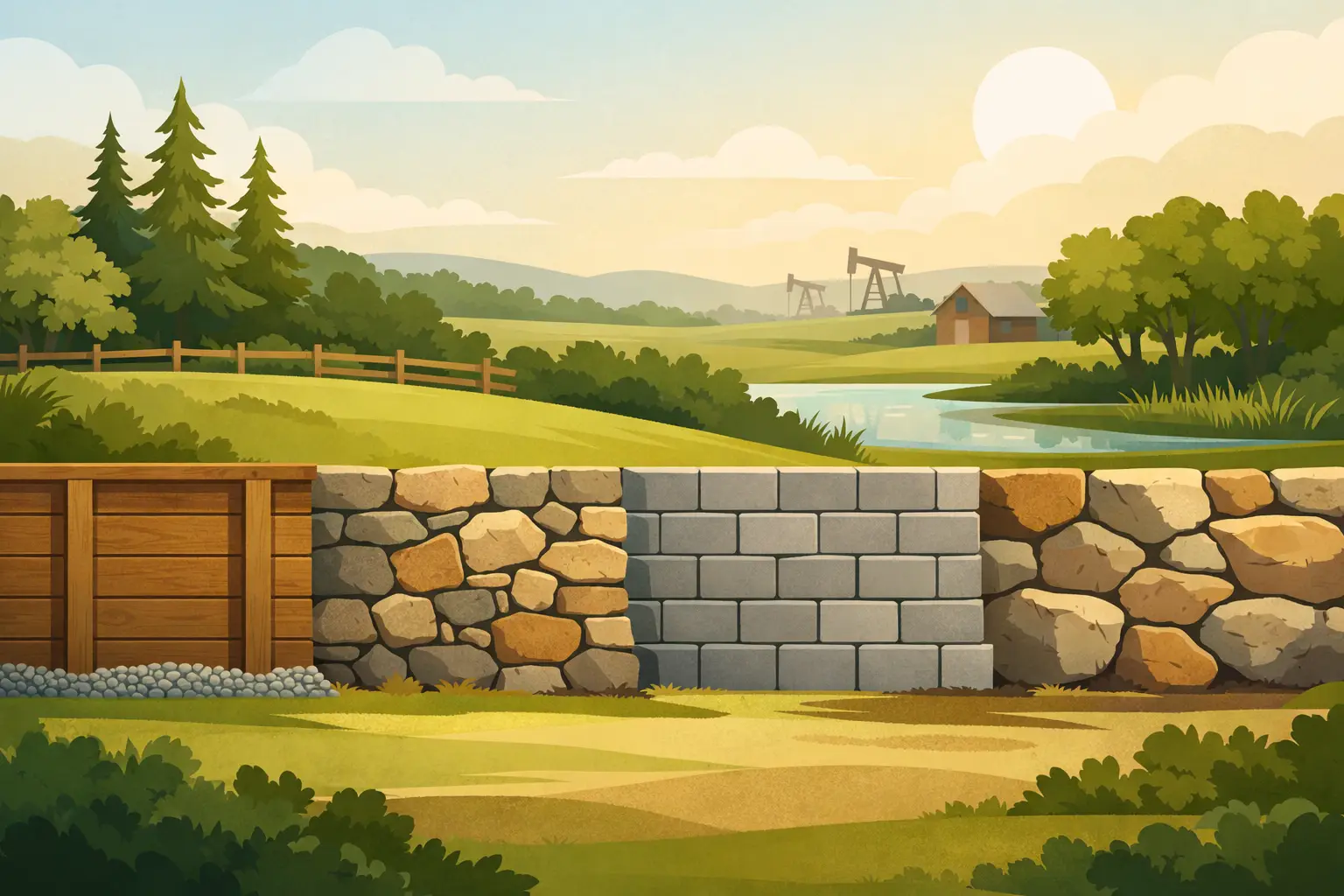
A retaining wall has to do more than look good beside a patio, driveway, or sloped backyard. It must hold back soil, move water away from the structure, and stand up to years of East Texas rain, heat, and shifting ground. The best retaining wall materials are the ones that match the wall’s height, drainage needs, style, and budget – not simply the ones that look best in a photo.
For homeowners in Tyler and surrounding communities, material selection matters because drainage is often part of the problem. A wall built without the right base, backfill, and water management can lean, crack, or fail regardless of whether it is made from stone, timber, or concrete. Start with the purpose of the wall, then choose the material that supports a lasting solution.
What Makes a Retaining Wall Material a Good Fit?
The right material depends on what the wall needs to accomplish. A short garden wall that creates a planting bed has different requirements than a wall supporting a sloped yard near a home or driveway. Height, soil pressure, water flow, access for equipment, and the overall landscape design all affect the decision.
In East Texas, moisture deserves special attention. Heavy rain can saturate soil and create pressure behind a wall. Clay-rich soil may also expand when wet and contract during dry periods. A professional installation accounts for these conditions with proper excavation, compacted base material, drainage gravel, and a way for water to exit behind the wall.
Appearance matters, too. A retaining wall can define a backyard, frame a patio, create level play space, or turn an unusable slope into a functional landscape feature. The best choice should look at home in the property while providing the strength the site requires.
Best Retaining Wall Materials for Lasting Results
Segmental Concrete Block
Segmental concrete retaining wall blocks are one of the most practical choices for many residential projects. These manufactured blocks are designed to stack and interlock, creating a clean, consistent wall with built-in strength. They are available in a wide range of colors, textures, and face styles, so homeowners can choose a traditional, rustic, or more modern appearance.
Concrete block works especially well for curved walls, raised landscape beds, terraced yards, and medium-height retaining walls. When properly installed with a compacted base and drainage system, it can provide long-term performance with relatively low maintenance. Individual blocks can also be replaced if one is damaged.
The main trade-off is that the installation details matter greatly. A wall that is not properly leveled at the base or does not include adequate drainage can shift over time. Taller walls may require geogrid reinforcement within the soil behind the wall and may need engineering or permitting depending on local requirements.
Natural Stone
Natural stone offers a timeless look that works beautifully with wooded lots, established landscaping, and homes with traditional exterior finishes. Fieldstone, limestone, flagstone, and other regional stone options can create a wall that feels custom rather than manufactured. No two stones are identical, which gives the finished project depth and character.
Stone is an excellent option when visual impact is a top priority. It is durable, weather-resistant, and can complement patios, walkways, fire features, and landscape borders. Dry-stacked stone walls can suit lower decorative applications, while mortared or engineered stone walls are better suited for locations where more support is needed.
Natural stone is often more labor-intensive than concrete block. The cost can vary based on the stone selected, the wall design, and the amount of fitting required during installation. It is a worthwhile investment for homeowners who want a distinctive landscape feature, but it should be built with the same attention to base preparation and drainage as any other retaining wall.
Poured Concrete
Poured concrete creates a solid, streamlined retaining wall that can work well with contemporary homes, narrow side yards, and areas where a clean vertical finish is preferred. It can be formed into custom shapes and finished in several ways, including smooth, textured, stained, or faced with stone veneer.
For structural applications, poured concrete can be a strong solution when designed and reinforced correctly. It is often used where space is limited and a thick, stepped-back block wall would take up too much of the usable yard. It can also provide a polished look around driveways, pool areas, and modern outdoor living spaces.
However, concrete is not automatically maintenance-free or immune to movement. Poor drainage and soil shifting can still lead to cracking. Repairing a significant crack in a poured wall is generally more involved than replacing a single modular block. This material is best for projects where structural planning, reinforcement, and professional installation are built into the scope from the start.
Timber
Timber retaining walls are often chosen for their warm, natural appearance and their lower upfront cost. Pressure-treated landscape timbers can work well for short walls, garden edges, and simple grade changes in a backyard. They blend naturally with fencing, mulch beds, and casual landscape designs.
For a low retaining wall with good drainage, timber can be a practical option. It is also easier to modify than concrete or stone if a homeowner plans to update the landscape later. But wood has a shorter service life than masonry materials, particularly in damp locations where it remains in contact with soil.
Even treated lumber can eventually rot, warp, or attract insects. Timber is usually not the best choice for a tall wall, a wall near a structure, or a location with persistent drainage issues. If you prefer the look of wood, it is wise to be realistic about maintenance and future replacement costs.
Brick and Veneer-Faced Walls
Brick can create a polished, traditional look that pairs well with homes featuring brick exteriors. In many cases, brick is used as a facing over a structurally sound concrete or block wall rather than serving as the primary retaining structure. Stone veneer can be used similarly to give a concrete or block wall a more custom appearance.
This approach offers design flexibility. Homeowners can prioritize structural performance behind the wall while choosing a finish that ties into the home, outdoor kitchen, columns, or existing hardscape. It is especially useful when curb appeal is as important as grade control.
The added finish can increase project cost, and masonry joints may need occasional maintenance over time. Still, a properly built wall with a brick or stone-facing detail can add significant visual value to a front yard or outdoor entertaining area.
Do Not Choose Material Before Addressing Drainage
A retaining wall is only as dependable as the system behind it. Water is one of the most common reasons walls bow, tilt, or deteriorate early. Rainwater trapped in the soil creates hydrostatic pressure that pushes outward against the wall. In a region with frequent heavy rainfall, that pressure can build quickly.
A quality retaining wall installation typically includes a compacted gravel base, free-draining aggregate behind the wall, drainage pipe where needed, and careful grading at the top of the wall. The goal is to direct water away from the wall and away from the home’s foundation. Downspouts, swales, yard drains, and nearby slopes should all be considered before construction begins.
This is why a wall should not be treated as a stand-alone cosmetic upgrade. It is often part of a larger landscaping and drainage plan. Correcting the water issue first protects the wall and helps prevent muddy areas, erosion, and foundation concerns elsewhere in the yard.
How to Choose the Right Material for Your Property
Start by considering wall height and location. A short wall around a flower bed may allow for timber, natural stone, or small concrete blocks. A wall supporting a major slope, driveway edge, or elevated patio needs a more structural approach, often using reinforced concrete block or engineered poured concrete.
Next, think about the look you want to achieve. Concrete block offers versatile colors and patterns. Natural stone delivers a more organic, high-end appearance. Timber has a relaxed, rustic character. Brick or veneer details can connect the wall visually to the home.
Finally, consider long-term ownership costs, not only the initial price. Timber may cost less at installation but will likely need replacement sooner. Stone and concrete products cost more upfront but generally provide a longer service life when installed correctly. The most cost-effective wall is one that fits the site, handles water properly, and does not need major repair a few seasons later.
Cullz Outdoor LLC helps homeowners create retaining wall solutions that improve both the function and appearance of their properties. A site visit can clarify whether your yard needs a simple landscape border, a reinforced wall, drainage improvements, or a coordinated plan that brings all of those elements together.
A well-chosen wall should make your outdoor space feel more usable the moment it is complete – and remain dependable long after the first heavy East Texas storm.
Leave a Reply