
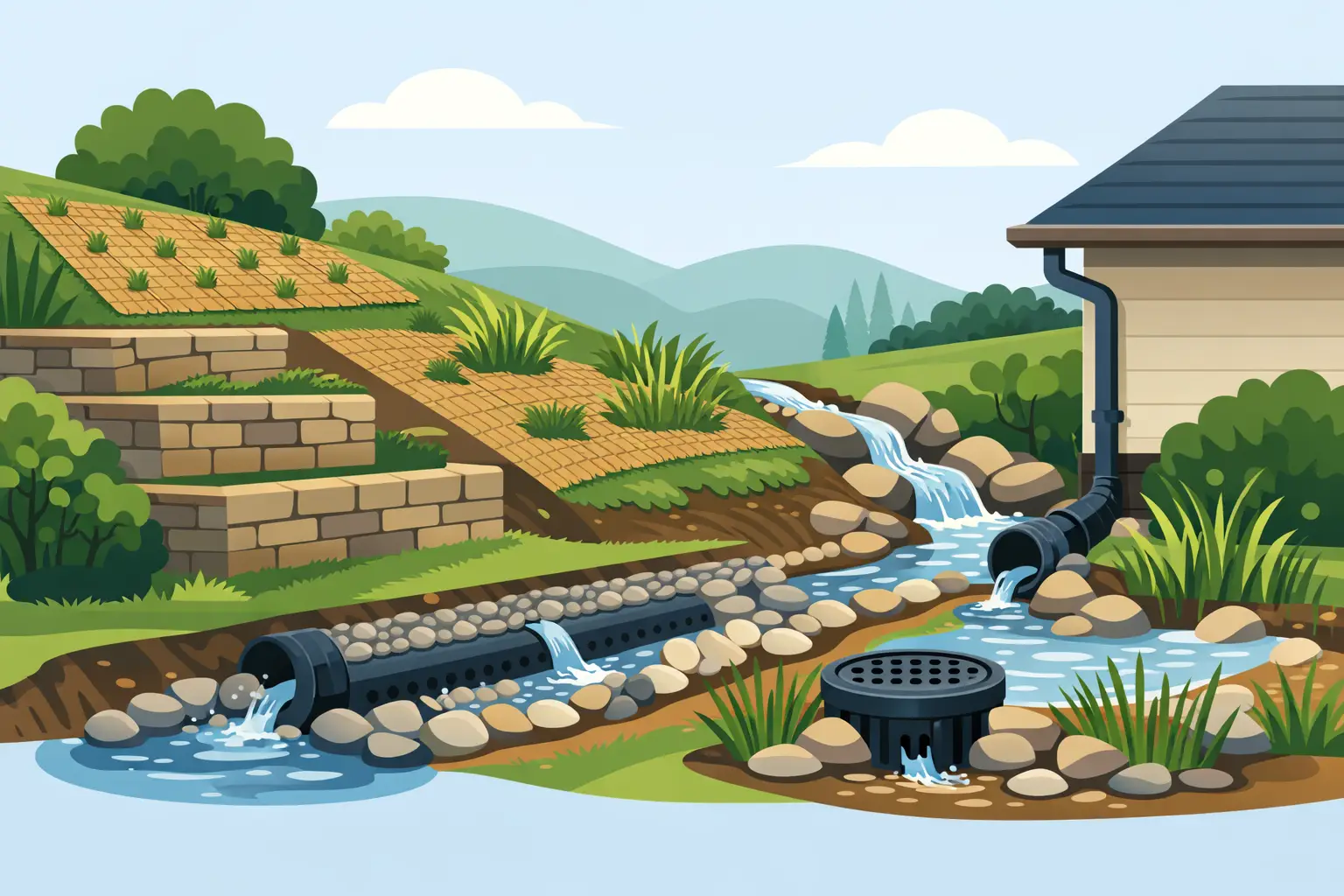
A rainstorm should leave your lawn refreshed, not carve a channel through the grass, wash mulch into the driveway, or expose tree roots along the fence line. Effective erosion control for yard areas starts by following the water: where it starts moving, where it gains speed, and where it finally leaves your property. In Tyler and across East Texas, heavy rain, clay-heavy soil, and sloped lots can turn a small drainage issue into a larger landscape repair.
Start With the Cause of Erosion
Erosion is not simply bare dirt on a hill. It is soil being carried away by water or, less often, wind. Replacing the soil without correcting the water path usually creates the same problem again after the next hard rain.
Walk your property shortly after rainfall, if it is safe to do so. Look for muddy runoff, ruts in the lawn, sediment collecting near patios, washed-out mulch beds, and low spots that stay wet. Pay close attention to roof downspouts, driveway edges, fence lines, the base of slopes, and areas where one yard drains toward another.
The source may be obvious, such as a downspout releasing a concentrated stream beside the foundation. Other situations take more investigation. A backyard may be receiving runoff from a neighboring higher lot, or a shallow grade may be directing water across turf until it cuts a path near the property line.
Soil type matters, too. East Texas clay can shed water quickly when it is compacted or dry, while sandy soil may move more easily once water begins flowing over it. The right repair depends on the volume of water, the steepness of the slope, the available outlet, and how the yard is used.
Erosion Control for Yard Problems: Match the Fix to the Water
A good solution slows, spreads, captures, or redirects water before it takes soil with it. Often, the most durable plan combines two or more methods rather than relying on one material alone.
Improve the grade first
For mild erosion, reshaping the ground can make a major difference. A properly graded yard directs water away from the home and prevents it from pooling against a patio, fence, or foundation. Small swales, which are broad and shallow channels, can guide sheet flow through the yard without looking like a ditch.
Grading should be deliberate. Moving dirt in the wrong direction can send water toward a neighbor or create a new low spot near the house. This is one reason a professional site assessment is valuable when drainage concerns involve foundations, property boundaries, or larger slopes.
Control roof runoff
Roof water is one of the most common causes of concentrated erosion. Even a modest roof can release a surprising amount of water during a Texas downpour. If a downspout empties directly onto mulch or a bare slope, it can excavate a hole within a season.
Extensions can carry water farther from the home, but they are not always enough. Depending on the layout, runoff may need a buried drainage line, a pop-up emitter in a suitable discharge area, a catch basin, or a rock-lined outlet that slows water before it reaches the lawn. The goal is not to hide the water. It is to give it a controlled route.
Stabilize exposed soil with plants and ground cover
Healthy vegetation is one of the simplest forms of erosion protection. Grass roots hold surface soil together, while shrubs, native plantings, and ground covers help break the force of raindrops and slow runoff. A thin or patchy lawn is more likely to wash away, especially on a slope.
For a gentle incline, reseeding or installing sod may be the right answer once drainage has been addressed. On steeper areas, erosion-control blankets or mats can keep seed and soil in place while plants establish. These materials are useful during the vulnerable period before roots take hold, but they are not a substitute for correcting high-volume runoff.
Mulch can protect planting beds, but loose mulch may float or wash away in heavy rain. On a slope, use the right depth, create a defined edge, and consider heavier materials or plantings that anchor the bed. Avoid piling mulch against tree trunks or the home’s siding.
Use rock where water naturally concentrates
Rock can be a practical choice for drainage outlets, dry creek beds, and sections of a yard where water repeatedly flows. It protects underlying soil from moving water and can become an attractive landscape feature when it is sized and installed correctly.
A few decorative stones scattered over a washout are rarely enough. The area typically needs excavation, a stable base, appropriate filter fabric where needed, and rock large enough to resist the flow. Smaller gravel may shift during storms, while oversized rock can look out of place in a small residential bed. The best choice balances function with the appearance of the surrounding landscape.
Add retaining walls when the slope needs structure
A retaining wall is not necessary for every uneven yard, but it can be the right long-term solution where a steep grade is losing soil or where a usable flat area is needed. Properly built walls hold back soil, create defined planting or living spaces, and can protect nearby hardscaping and fences from shifting ground.
Drainage behind the wall is essential. Water pressure is one of the leading reasons retaining walls lean, crack, or fail. A wall should be designed with the proper base, backfill, drainage stone, and a route for water to escape. For taller walls or significant grade changes, engineering and local requirements may apply.
Protect the Parts of the Yard That Make Erosion Worse
Some common landscaping choices unintentionally contribute to erosion. Compacted soil prevents water from soaking in. Bare construction areas send sediment downhill. A worn footpath on a slope can become a runoff channel. Even mowing too low weakens turf and leaves soil more exposed.
After the main drainage correction is complete, restore the surface carefully. Loosen compacted areas when appropriate, add quality topsoil where material has been lost, and establish plant cover as quickly as conditions allow. Keep new seed or sod consistently watered, but do not overwater to the point that water begins running off.
If people regularly walk across a vulnerable slope, a defined path, steps, or pavers may protect both the lawn and the people using it. If pets create a worn route along the fence, consider a more durable surface or adjust the layout so runoff does not follow that same track.
When a DIY Repair Is Reasonable and When to Call for Help
Homeowners can often handle minor fixes, such as extending a downspout, repairing a small mulch washout, reseeding a thin patch of turf, or adding simple edging to keep soil in a garden bed. The key is to work during dry conditions and observe whether the repair performs well after rain.
Professional help is a smart investment when water is reaching the foundation, washing soil from a steep slope, undermining a fence, damaging a driveway or patio, or crossing property lines. It is also worth getting a site-specific plan when several symptoms appear at once, such as standing water, muddy areas, and recurring washouts. Treating only the most visible spot can waste time and money.
Cullz Outdoor LLC helps East Texas homeowners look at the full picture, from drainage direction and grading to planting, hardscaping, and retaining wall construction. A coordinated approach can solve the practical problem while improving the way the outdoor space looks and works.
Keep an Eye on the Yard After Every Major Storm
Erosion control is not a one-time task. Check drainage outlets for debris, refill displaced mulch before soil is exposed, and watch for new channels forming at the edge of rock beds or turf. Small changes are easier to correct before they become structural repairs.
The best yard drainage solution is one you barely notice: water moves where it should, grass stays in place, and your outdoor space remains ready for family time, gardening, and everyday use. If rain keeps changing the shape of your property, address the water path now and give the soil a lasting reason to stay put.
Leave a Reply