
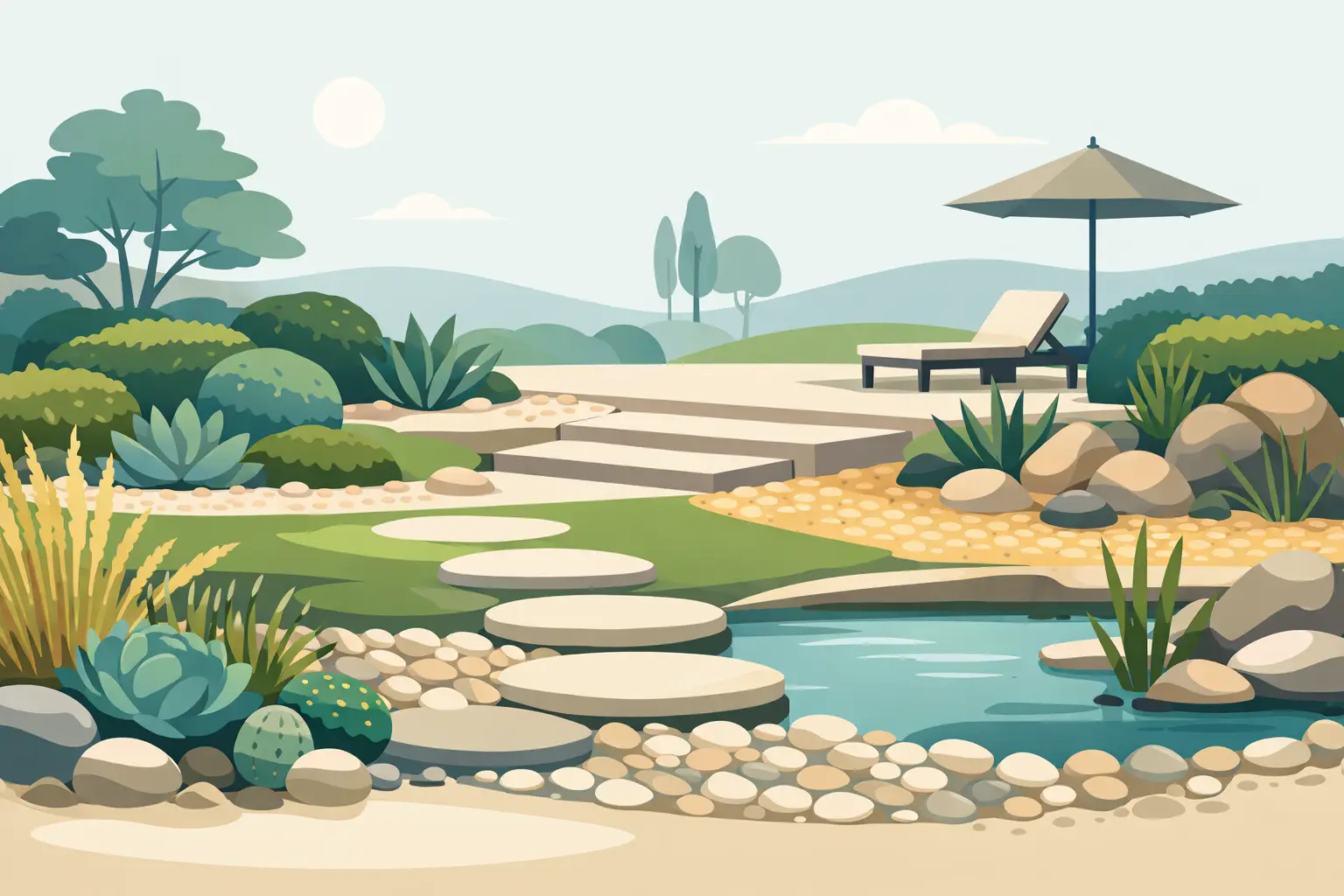
A beautiful East Texas yard should not require every free Saturday to keep it looking presentable. Between hot summers, heavy rain, and fast-growing grass, homeowners in Tyler need outdoor spaces built for real conditions – not landscapes that look good for one season and create a never-ending chore list. The best low maintenance landscaping ideas combine durable materials, climate-appropriate plants, and smart drainage so your property stays attractive with less watering, trimming, and repair work.
What Makes Landscaping Low Maintenance?
Low maintenance does not mean no maintenance. Every yard needs occasional cleanup, seasonal trimming, and attention after severe weather. The goal is to reduce repetitive work while choosing features that hold up well over time.
For East Texas homes, that usually means using native or drought-tolerant plants, limiting large areas of high-maintenance turf, installing mulch or rock where it makes sense, and directing water away from planting beds and foundations. A thoughtful plan also considers how your family uses the yard. A play area, a dog run, a front entry, and a backyard patio all need different materials and levels of care.
12 Best Low Maintenance Landscaping Ideas for East Texas Homes
1. Replace Problem Lawn Areas With Mulch Beds
Grass struggles in deep shade, around tree roots, and along narrow strips beside fences or driveways. Rather than repeatedly reseeding and mowing those difficult spots, turn them into clean planting beds. A defined bed with quality mulch, a few well-spaced shrubs, and edging can look intentional while cutting down on mowing.
Mulch helps retain moisture, protects plant roots from temperature swings, and limits weed growth. It does need refreshing from time to time, but that is usually far less work than maintaining thin, patchy turf.
2. Choose Native and Drought-Tolerant Plants
Plants suited to the local climate have a better chance of surviving heat, humidity, and changing rainfall without constant attention. Options such as Texas sage, yaupon holly, dwarf palmetto, ornamental grasses, coneflower, lantana, and black-eyed Susan can add color and texture with less watering than more delicate varieties.
The right choice depends on sunlight and soil conditions. A plant labeled drought-tolerant still needs water while establishing roots, and a sun-loving shrub will not thrive under dense tree cover. Group plants with similar needs together so watering stays simple.
3. Use Ground Covers on Slopes and Bare Soil
Open soil invites weeds, erosion, and muddy runoff. Low-growing ground covers can stabilize difficult areas while creating a finished appearance. Depending on the site, ornamental grasses, trailing plants, or spreading evergreen options may work better than lawn on a slope or beneath trees.
This approach is especially helpful where mowing is awkward or unsafe. It also reduces the temptation to keep adding loose soil to washed-out areas without addressing the cause of the erosion.
4. Add a Gravel or Stone Path
A walkway does more than connect one area of the yard to another. It keeps foot traffic from wearing down grass, helps prevent muddy paths, and gives the landscape a sense of order. Crushed gravel, flagstone, and concrete pavers are durable choices for routes from a driveway to a gate, patio, garden, or storage area.
For best results, the base matters as much as the surface. Proper grading, compacted material, and edging keep a path from shifting, holding water, or spreading into nearby beds.
5. Create a Hardscape Patio That Earns Its Space
A well-built patio replaces a section of lawn with an outdoor area your family can actually use. It provides a stable place for grilling, dining, visiting, or relaxing without adding weekly mowing and watering. Concrete, pavers, and natural stone each offer different looks and maintenance needs, but all can be easier to manage than an oversized lawn.
The trade-off is the upfront investment and the need for careful installation. Patios should be graded to move water away from the home, with enough room for furniture and everyday movement.
6. Install Strong Bed Edging
Simple edging creates a crisp line between lawn, mulch, rock, and planting beds. That clean separation reduces the time spent pulling grass out of beds and keeps mulch from drifting across the yard after rain.
Steel, stone, concrete, and quality composite edging can last longer than lightweight plastic products. The best material depends on the style of your home, the curve of the bed, and whether the edge needs to stand up to mower wheels or foot traffic.
7. Use Rock Carefully in High-Impact Areas
Rock landscaping can be a practical choice around downspouts, along side yards, near HVAC equipment, or in small areas where plants struggle. River rock and larger stone can reduce erosion and prevent mud from splashing against the house.
However, rock is not automatically maintenance-free. Leaves and debris can collect between stones, weeds can still appear, and large rock beds may hold heat near plants. Use it purposefully instead of covering every bed with stone, especially on sunny properties where reflected heat is a concern.
8. Improve Drainage Before You Plant
Poor drainage can ruin even the toughest landscaping. Standing water, soggy turf, washed-out mulch, and soil movement are signs that water needs a better route. French drains, catch basins, swales, downspout extensions, and properly graded surfaces can protect the yard and the home’s foundation.
Addressing drainage early prevents wasted money on plants or hardscapes that will later need to be removed. It also makes maintenance easier because beds stay in place, paths remain usable, and turf is less likely to become muddy after every storm.
9. Build Raised Beds for Simple Plant Care
Raised planting beds bring flowers, herbs, or small shrubs into a defined space with improved soil control. They can be especially useful where native soil is compacted, poorly drained, or difficult to work. A raised bed also creates a natural boundary that makes weeding and mulching more manageable.
Keep the design modest. A few well-planned beds are easier to maintain than a large garden packed with plants that need frequent pruning, fertilizing, and watering.
10. Plant Shrubs With Room to Mature
One of the most common landscaping mistakes is placing shrubs too close together or too close to the house. They may look full at installation, but within a few years they require constant trimming to avoid crowding windows, walkways, and each other.
Check the mature width and height before planting. Giving each shrub enough space creates a more natural look and reduces annual pruning. This small planning decision can save significant work over the life of the landscape.
11. Add a Fence for Privacy and Definition
A fence is not a plant, but it can simplify the entire outdoor space. It creates privacy, defines pet and play areas, and provides a clean backdrop for a smaller, more focused landscape design. With the right material and installation, a fence requires far less ongoing attention than trying to screen a property line with rows of fast-growing plants.
Wood brings a traditional look but needs periodic staining or sealing. Vinyl and metal options generally require less upkeep, though the right choice depends on neighborhood style, budget, and privacy needs.
12. Use an Efficient Irrigation Plan
Even drought-tolerant landscaping benefits from dependable watering during establishment and prolonged dry periods. Drip irrigation or soaker lines deliver water near plant roots with less waste than spraying an entire bed. Timers also prevent the common problem of watering too often simply because it is easy to forget what was done last.
Irrigation should support the landscape, not compensate for poor plant selection. If a bed needs daily watering to survive, it may be time to reconsider the plant choices or the amount of sun it receives.
Start With the Areas That Cause the Most Work
You do not need to redesign the whole property at once. Start with the areas that repeatedly create frustration: the muddy side yard, the bare patch under a tree, the flower bed overrun with weeds, or the backyard that has no usable gathering space. Solving one high-maintenance problem well often makes the rest of the yard easier to plan.
A local outdoor contractor can help match materials, plants, drainage solutions, and hardscape features to your property’s conditions. Cullz Outdoor LLC works with homeowners across Tyler and East Texas to create outdoor improvements that look polished, function properly, and fit the way each family lives.
The best long-term landscape is not the one with the most features. It is the one that gives you a yard you enjoy seeing from the curb and using on the weekend – without turning every weekend into yard work.