
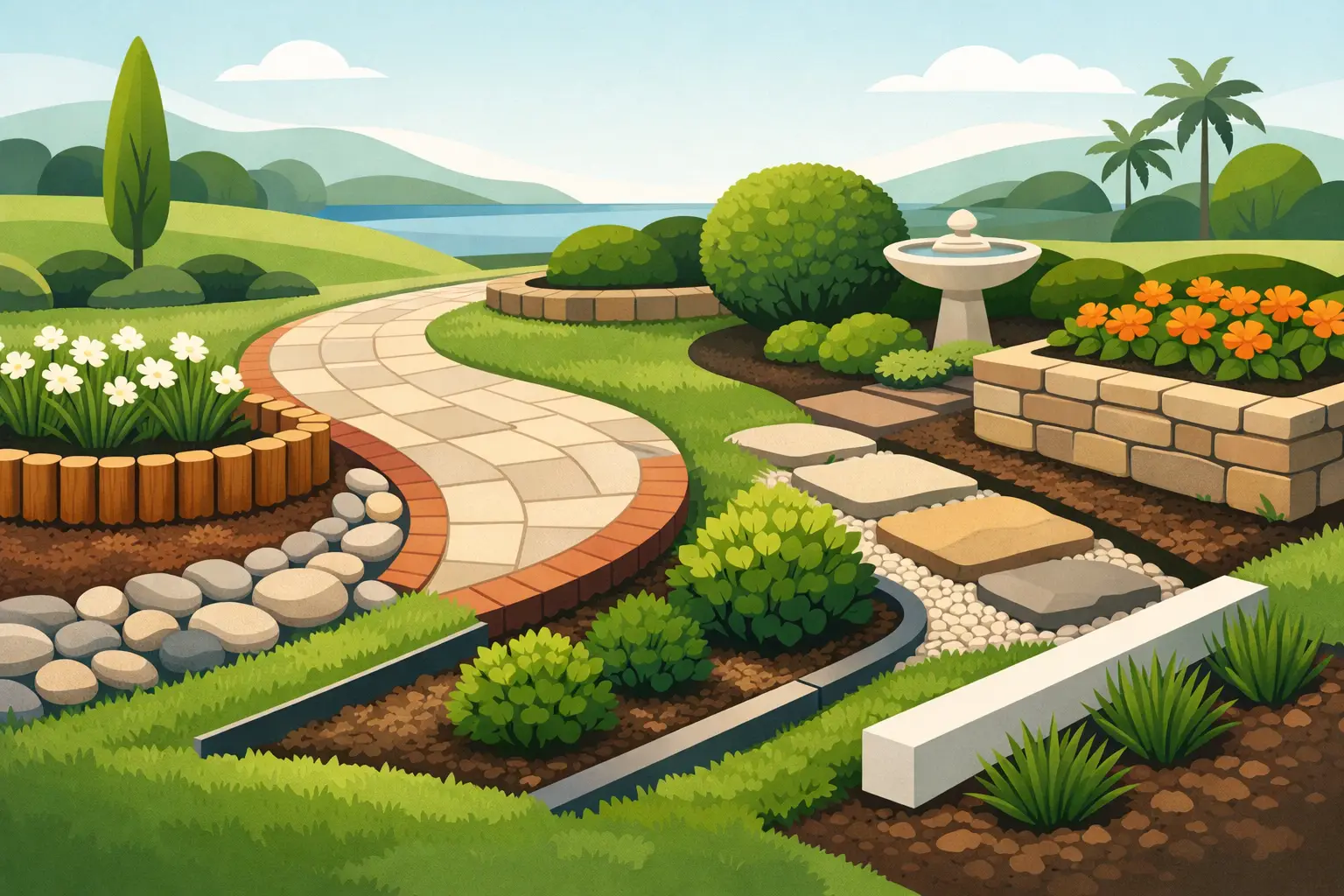
A yard can look well cared for or unfinished based on one small detail – the line where your lawn meets your flower beds, walkway, or mulch. That is why landscape edging ideas matter more than most homeowners expect. Good edging gives your yard a cleaner shape, helps keep materials where they belong, and makes routine maintenance easier week after week.
In East Texas, edging also has to do more than look nice. Heavy rain, fast-growing grass, shifting soil, and long mowing seasons can expose weak materials and poor installation pretty quickly. The best choice is not always the fanciest one. It is the edging that fits your home, your maintenance habits, and the way your yard actually works.
What good landscape edging should do
The right edge creates a visual boundary, but it also solves practical problems. It can keep mulch out of the grass, stop turf from creeping into beds, and give mowing crews a cleaner path to follow. Around walkways and patios, it can help materials stay in place and keep the layout looking intentional.
That said, every yard has trade-offs. Some edging styles are affordable up front but need more maintenance later. Others cost more to install but hold their shape for years. If your property has drainage issues, slopes, or active root systems, the best edging choice may be different from what looks best in a photo.
12 landscape edging ideas worth considering
1. Steel edging for a clean, modern line
Steel edging is one of the sharpest-looking options for homeowners who want a crisp border without a bulky appearance. It disappears visually while still creating a strong separation between lawn and planting areas. That makes it a strong fit for modern homes, simple front beds, and properties with a more polished design.
It usually holds up well over time, but proper installation matters. In areas with shifting ground or poor grading, thin metal edging can move if it is not secured correctly. It also tends to cost more than basic plastic options, so it is best for homeowners who want a long-term finish rather than the lowest initial price.
2. Brick edging for classic curb appeal
Brick gives a yard a timeless look and pairs well with traditional homes. It works especially well around foundation beds, garden borders, and front walkways where a little structure can make the whole landscape feel more finished.
Brick can be laid flat, angled, or upright depending on the look you want. The main advantage is appearance, but durability is also strong when installed on a stable base. The trade-off is that brick edging can shift over time if the soil stays wet or the base is not compacted well.
3. Natural stone for a custom look
If you want edging that feels more organic, natural stone is hard to beat. It works well in backyard gardens, around trees, and near patios where a softer, more textured look makes sense. No two installations look exactly the same, which gives the space more character.
Stone is also versatile. It can look rustic or upscale depending on the material and the way it is stacked or spaced. The downside is that irregular stone can be harder to install cleanly, and some designs create more gaps where grass and weeds can creep in.
4. Concrete curbing for long-term definition
Concrete landscape curbing is one of the strongest edging choices for homeowners who want something permanent. It creates a solid barrier, holds shape well, and can be formed into curves that match the flow of the yard.
This option is especially helpful where grass aggressively spreads into planting beds. It also stands up well in high-maintenance areas where string trimmers and mowers regularly hit the edge. The main consideration is flexibility – once it is installed, changes are harder to make than with modular materials.
5. Paver edging around patios and walkways
Pavers are a natural choice when your edging needs to tie into existing hardscape. If you already have a paver patio, stepping stone path, or gravel walkway, matching or complementary paver edging can pull the whole design together.
This style works well when function and appearance matter equally. It can help contain gravel and define transitions between spaces. It does require a solid base, though, and if the surrounding grade is off, the edge can settle unevenly over time.
6. Trench edging for a simple, low-cost border
Sometimes the cleanest solution is also the simplest. A trench edge is basically a cut line between the lawn and bed, usually shaped into a small V that creates separation without adding material.
This approach can look sharp in the right yard, especially in natural-style landscapes. It is affordable and unobtrusive, but it takes upkeep. In a fast-growing East Texas lawn, that edge needs to be refreshed regularly or it will lose definition.
7. River rock edging for drainage-prone areas
River rock edging can be both decorative and practical, especially in spots where water tends to move through the yard. Around downspouts, side yards, and bed edges near drainage features, rock can help reduce washout while still giving the area a finished appearance.
It is not the best choice everywhere. Loose stone can migrate into the lawn, and weeds can become a problem without proper fabric and prep work underneath. Still, when drainage is part of the conversation, this option can make more sense than a purely decorative border.
8. Wood edging for garden spaces
Wood edging has a warm, approachable look that fits vegetable gardens, play areas, and casual backyard beds. Timber, landscape ties, or pressure-treated boards can create a clear border with a more natural feel than concrete or metal.
The challenge in East Texas is moisture. Wood can rot, warp, or attract pests over time, especially in consistently damp areas. If you like the look, it works best where you understand it may not be a forever solution.
9. Decorative block for raised bed definition
For beds that need more presence, decorative block offers both edging and light retaining support. This can be useful on slight slopes or in areas where you want a planting bed to stand out more from the lawn.
Because the blocks are larger, they create a more substantial visual border. That can be a plus in big open yards but may feel too heavy in smaller front beds. Scale matters here as much as style.
10. Plastic edging for budget-friendly control
Plastic edging is common because it is affordable, flexible, and easy to shape around curves. It can work for basic bed separation and is often used when homeowners want a quick improvement without a major investment.
Still, quality varies a lot. Lower-grade plastic can heave, crack, or become exposed over time, especially with mowing and weather changes. It is usually best for simple applications rather than high-visibility focal areas.
11. Cobblestone edging for upscale texture
Cobblestone gives a landscape a more refined, high-end look. It works well along front walks, driveway borders, and formal planting beds where a stronger architectural feel is the goal.
This is one of those landscape edging ideas that can add real character without overwhelming the yard. It does require careful installation to look intentional instead of uneven. If the rest of the property has strong hardscape elements, cobblestone often fits better than softer materials.
12. Mixed-material edging for custom yards
Not every property needs one edging material from front to back. In fact, some of the best-looking landscapes use different borders in different zones. You might use steel in the front yard for a clean presentation, stone in the backyard for a natural garden feel, and pavers around a patio for continuity.
The key is making those choices feel coordinated rather than random. Repeating color, texture, or shape can help the yard feel connected even when the materials change. This is often the best route for homeowners who want both performance and style across different outdoor spaces.
How to choose the right edging for your yard
Start with function before appearance. If your biggest problem is grass creeping into beds, you need a stronger barrier than if you are simply defining a decorative border. If runoff is washing mulch into the lawn, drainage and grade matter just as much as material.
Next, think about maintenance. Some homeowners are happy to touch up edges regularly. Others want something they can install once and manage with minimal effort. There is no wrong answer, but being honest about upkeep will save frustration later.
Style should fit the home and the rest of the landscape. A rustic stone edge may look great in a backyard garden but out of place against a formal front entry. The best edging does not call too much attention to itself. It just makes the whole property look more finished.
Finally, consider how edging connects with the rest of your outdoor plans. If you are adding beds, improving drainage, building a retaining wall, or updating walkways, it often makes sense to plan edging as part of the full project instead of treating it as an afterthought. For homeowners who want one team to look at the whole picture, Cullz Outdoor LLC can help match the edging style to the way the yard needs to perform.
A good edge does more than frame a flower bed. It gives your yard order, saves maintenance time, and makes every other improvement look more intentional.