
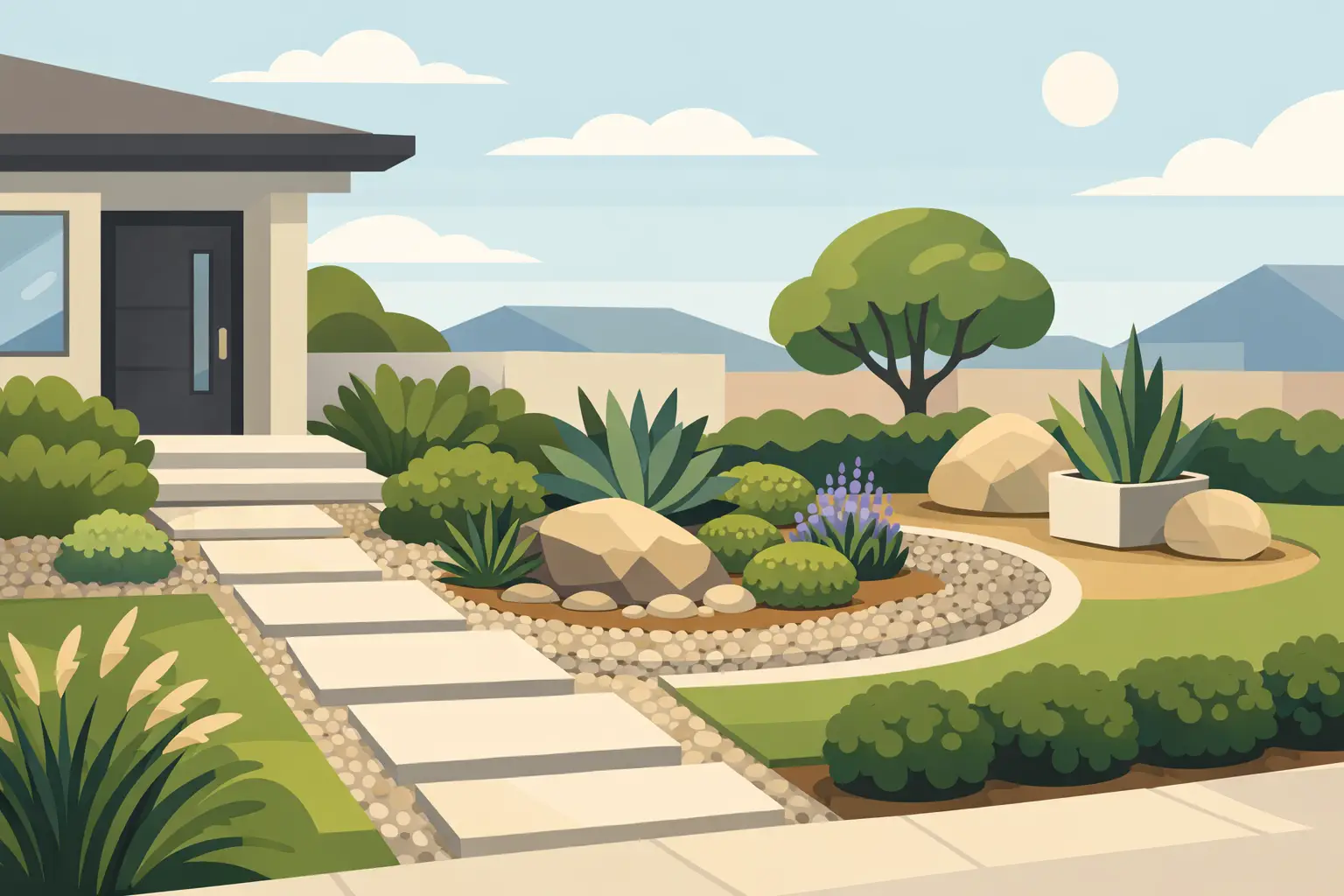
If your front yard looks good for about three days after mowing and then starts slipping back into “weekend project” territory, the issue usually is not effort. It is design. Low maintenance landscaping for front yard spaces works best when the layout, plant choices, and drainage all support the way you actually live, not the way a picture-perfect yard looks in one spring photo.
For many homeowners in Tyler and across East Texas, the real goal is simple. You want a front yard that looks clean, attractive, and well cared for without eating up every Saturday. That means thinking beyond grass alone and building a landscape that handles heat, rain, foot traffic, and seasonal change with less intervention.
What low maintenance landscaping for front yard areas really means
Low maintenance does not mean bare, plain, or lifeless. It means reducing the kind of upkeep that repeats constantly – mowing, edging, replacing struggling plants, fighting erosion, and dealing with muddy spots after rain.
A well-planned front yard usually has a balance of lawn, planting beds, hardscape, and practical features that solve problems before they become ongoing chores. In East Texas, that might mean limiting turf in hard-to-mow areas, choosing plants that can handle summer heat, and making sure water drains where it should.
This is where homeowners often save time and money over the long run. A yard that is designed correctly from the start needs fewer seasonal fixes and fewer emergency cleanups after heavy rain.
Start with the biggest maintenance problem
Before choosing mulch colors or new plants, look at what creates the most work now. Some front yards demand constant attention because the slope pushes water toward the house. Others have thin grass under shade trees, overgrown foundation beds, or narrow strips of lawn that are awkward to mow.
The best upgrades come from solving those pain points first. If drainage is the real issue, adding more plants will not fix it. If your mower struggles around tree roots, a reshaped bed may do more than reseeding grass again. If weeds keep taking over open soil, that often points to poor bed definition or thin plant coverage.
Low-maintenance landscaping starts with honest priorities. What do you want to stop doing so often?
Reduce lawn where lawn does not perform well
Grass is often the highest-maintenance part of a front yard. It needs mowing, edging, watering during dry periods, fertilizing, and repair in stressed areas. That does not mean you need to eliminate it entirely. It does mean you should be selective.
A smaller, healthier lawn usually looks better than a large yard full of patchy or hard-to-reach grass. Areas near fences, around mailboxes, along steep slopes, or beneath mature trees can often be converted into beds, stone borders, or groundcover zones that are easier to maintain.
In many front yards, this one change makes the biggest difference. Less turf means less weekly work, especially during the peak growing season. It also creates room for more intentional curb appeal instead of relying on grass to do all the visual heavy lifting.
Choose plants that fit East Texas conditions
Plant choice is where many low-maintenance plans either hold up or fall apart. A plant can be beautiful and still be wrong for the space. If it needs constant trimming, extra water, or protection from local weather, it is not truly low maintenance.
For East Texas front yards, native and well-adapted plants tend to offer the best return. Shrubs, ornamental grasses, and hardy perennials that tolerate heat and seasonal moisture swings generally require less hands-on care once established. Evergreen structure also helps keep the yard looking finished year-round, even when flowering plants are out of season.
It helps to think in layers. A few reliable shrubs for shape, a consistent ground layer to reduce bare soil, and selected accent plants usually create a cleaner result than a crowded mix of high-maintenance varieties. Simpler planting plans are easier to prune, easier to mulch, and easier to keep looking intentional.
Mulch matters more than most homeowners expect
Mulch is one of the most practical tools in a front yard landscape. It helps hold moisture, suppress weeds, reduce erosion, and give beds a finished appearance. In a low-maintenance design, mulch is not just cosmetic. It is part of how the system works.
That said, mulch is not a cure-all. If beds are too sparse, weeds will still find room. If drainage is poor, water may still wash material out. If bed edges are undefined, the whole area can start looking messy faster than expected.
A properly edged bed with the right amount of mulch gives your front yard a cleaner look with less upkeep between visits. It also makes mowing and trimming easier because there is a clear separation between turf and planting areas.
Hardscaping can lower maintenance and improve curb appeal
When homeowners hear landscaping, they often think only about plants. But low-maintenance front yards usually benefit from hardscape features too. Stone borders, walkways, decorative gravel zones, and small retaining walls can reduce problem areas while adding structure and value.
This is especially helpful on properties with slopes, erosion issues, or narrow lawn sections that are difficult to maintain. A retaining wall can turn an awkward grade into a usable and attractive planting space. A defined walkway can protect grass from foot traffic and keep the front entry looking cleaner. Decorative stone can work well in targeted areas where turf and plants consistently struggle.
The trade-off is upfront cost. Hardscaping usually requires more investment at the beginning than basic planting work. But it often pays off in reduced maintenance and longer-lasting performance.
Drainage is part of low-maintenance landscaping
A front yard cannot be low maintenance if water is constantly creating new problems. Soggy turf, mulch washout, erosion, standing water, and foundation concerns all increase upkeep and shorten the life of your landscape.
That is why drainage should be part of the plan, not an afterthought. In some yards, the answer may be regrading. In others, it may involve swales, drainage systems, or retaining features that control runoff and protect planting areas.
This is one of the clearest examples of why customized solutions matter. Two front yards may look similar from the street and need completely different approaches once water movement is considered. A good design works with the property, not against it.
Keep the design clean and repeatable
One of the easiest ways to create a lower-maintenance front yard is to avoid overcomplicating it. Too many plant varieties, too many small bed shapes, and too many decorative elements can make the yard harder to care for and visually busier.
A cleaner plan often looks better from the curb and requires less work to maintain. Repeating the same few materials and plant types creates consistency. Wider, smoother bed lines are easier to edge than fussy curves. Grouping plants by similar water and pruning needs also helps cut down on unnecessary work.
This approach is especially effective for homeowners who want a polished result without a landscape that feels delicate or demanding.
Know where low maintenance still needs attention
No front yard is truly maintenance-free. Plants still need to be established, beds need occasional refreshing, and seasonal cleanup still matters. The difference is that a smart landscape reduces the frequency and intensity of that work.
It also helps to be realistic about expectations. A minimalist stone-heavy yard may reduce mowing, but it can feel stark if not balanced well. Dense planting can suppress weeds, but if spacing is too tight, pruning becomes a regular task. Even drought-tolerant plants need watering while roots develop.
The best front yards strike a balance between appearance, function, and upkeep. They are designed to stay attractive with reasonable maintenance, not zero maintenance.
When professional planning makes the difference
Many homeowners can handle small cosmetic updates on their own. But if your front yard has grading issues, poor drainage, erosion, or a layout that has never worked well, it often makes sense to bring in a team that can look at the full picture.
That matters even more when several needs overlap. You may need lawn reduction, planting, edging, drainage correction, and a retaining solution to get lasting results. Working with one experienced outdoor contractor can save time and help make sure each part of the project supports the others. For homeowners in East Texas, Cullz Outdoor LLC approaches front yard improvements with that bigger-picture mindset.
A low-maintenance front yard should make life easier, not just look good on installation day. When the right design choices are doing the heavy lifting, your home keeps its curb appeal with less stress, fewer recurring problems, and a lot less weekend catch-up.