
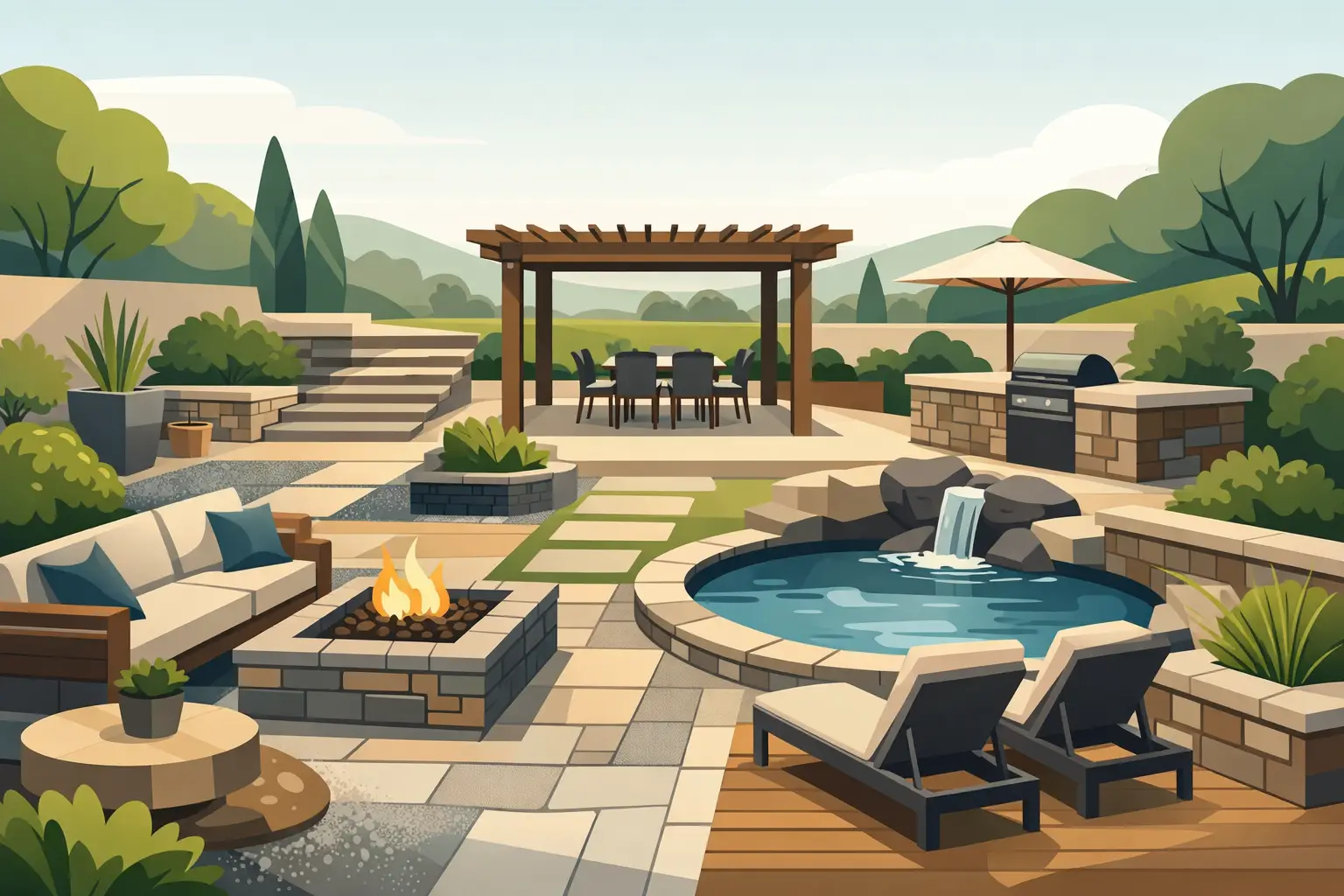
A patio should do more than fill space behind the house. It should give you a place to relax after work, host friends on the weekend, and handle East Texas weather without turning into a muddy headache. The best patio hardscape ideas are the ones that look good, fit the way your family lives, and hold up over time.
For many homeowners, the challenge is not finding inspiration. It is narrowing down what actually makes sense for their yard. Drainage, sun exposure, slope, maintenance, and how you plan to use the area all matter just as much as the color of the pavers or the shape of the patio. A well-built hardscape brings those pieces together so the finished space feels natural, useful, and worth the investment.
Patio hardscape ideas that work in real backyards
A good patio design starts with function. If you want a quiet spot for coffee in the morning, your layout will look different than a space built around grilling, outdoor dining, and larger gatherings. That is why the strongest hardscape plans usually begin with how the patio will be used, then match materials and features to that goal.
A simple paver patio is often the most flexible option. Pavers give you clean lines, a wide range of colors, and easier repairs down the road if a section ever shifts or settles. They can suit a traditional home, a newer build, or something in between. If you want a finished look without making the yard feel too formal, pavers are often a safe choice.
Stamped concrete can also work well when you want a broad, continuous surface with a decorative finish. It tends to give a clean appearance and can mimic stone or brick at a lower price point than some premium materials. The trade-off is that repairs are usually more noticeable if cracking occurs, so installation quality and site prep matter a great deal.
Natural stone patios bring a high-end look and a more organic feel. They fit especially well in yards with mature landscaping, retaining walls, or custom garden beds. Stone can be beautiful, but it usually comes with a higher material and labor cost. It also requires careful planning so the patio feels intentional instead of uneven or pieced together.
Gravel patios are another option worth considering for certain areas. They are more budget-friendly, allow drainage, and can create a relaxed outdoor setting. Still, gravel is not ideal for every homeowner. Furniture can wobble, loose stone can migrate into the lawn, and the surface may not feel as polished as pavers or concrete.
Choosing materials for East Texas conditions
In Tyler and surrounding East Texas communities, weather can shape patio performance just as much as design. Heavy rain, heat, and shifting soil put pressure on hardscape surfaces. That makes base preparation, grading, and water movement essential from the start.
Pavers perform well because they have a bit more flexibility than poured concrete. When installed correctly over a strong base, they can handle movement better and remain attractive for years. That does not mean they are maintenance-free, but they tend to be forgiving in a way some other surfaces are not.
Concrete can be durable too, especially for larger patios where budget is a concern. The key is understanding that concrete is rarely just about the slab itself. The surrounding drainage and soil conditions affect whether it stays stable or develops issues over time. A patio that looks great on day one can become a problem if water is allowed to collect around it.
Natural stone offers durability and timeless appeal, but the right stone selection matters. Some textures can become slick when wet, and some finishes make cleanup easier than others. If your patio will sit near a pool, outdoor kitchen, or heavily irrigated landscaping, slip resistance should be part of the conversation.
Hardscape features that make a patio more useful
A patio becomes more valuable when it supports everyday living, not just special occasions. That is where built-in hardscape features can make a noticeable difference.
Seat walls are one of the most practical additions. They define the edge of the patio, add extra seating without dragging out folding chairs, and help the space feel finished. In sloped yards, they can also work alongside grade changes in a way that feels more integrated than separate features placed around the yard.
A fire pit creates a natural gathering point and extends how often the patio gets used. On mild evenings, it can turn a basic patio into the part of the yard everyone actually wants to spend time in. The main question is scale. A fire feature should fit the patio, not overwhelm it or leave too little room to move around.
Outdoor kitchens and grill stations are another strong upgrade when entertaining is a priority. Even a compact built-in cooking area can make the patio feel more functional and reduce the back-and-forth to the house. These projects require more planning for utilities, clearances, and traffic flow, but when done well, they can change how a backyard is used year-round.
Lighting should be part of the hardscape discussion early, not an afterthought. Integrated lighting along steps, walls, and patio edges improves safety and gives the space a more finished look at night. It also highlights the investment you made instead of letting the yard disappear after sunset.
Layout matters as much as the material
Some of the best patio hardscape ideas are not about the surface at all. They are about shape, flow, and how the patio connects to the rest of the property.
A small square pad can work, but many patios benefit from zones. One area might hold a dining table, while another creates space for lounge seating or a fire pit. Even subtle changes in elevation or border detail can help separate those functions without making the yard feel chopped up.
Connection to the house matters too. A patio should feel like an extension of the home, not an isolated slab dropped into the backyard. Door locations, nearby windows, and walking paths all influence where the patio should begin and how wide it should be. If the transition feels awkward, the patio may be underused no matter how attractive it looks.
For properties with drainage issues or uneven grades, retaining walls and hardscape design often need to work together. This is especially true when a homeowner wants a larger patio on a sloped lot. In those situations, the project is not just decorative. It is structural, and that calls for planning that protects the long-term stability of the space.
How to avoid common patio mistakes
The biggest mistake is choosing style before solving the site conditions. A patio can have premium materials and still disappoint if water pools on the surface, the layout feels cramped, or the edge transitions are sloppy.
Another common issue is building too small. Homeowners often underestimate how much room furniture needs, especially when chairs are pulled out or guests are moving through the space. A patio that looks large on paper can feel tight once the grill, table, and seating are in place.
It is also easy to overbuild. Not every yard needs an outdoor kitchen, multiple levels, and a large fireplace. Sometimes the better investment is a clean, well-sized patio with thoughtful lighting, proper drainage, and one standout feature. Practical design usually ages better than trying to fit every trend into one project.
Material mismatch can be another problem. A rustic stone patio might look great in a photo, but it may not fit the architecture of your home or the level of maintenance you want. The best result usually comes from balancing appearance, performance, and budget instead of chasing a single look.
Building a patio that adds value over time
A well-designed patio can improve more than appearance. It can make the yard easier to use, reduce muddy areas, support better drainage planning, and add to the overall value of the property. Buyers notice outdoor spaces that feel intentional and well cared for.
That said, value is not only about resale. It is also about daily use. If your family spends more time outside, if entertaining becomes easier, or if the backyard finally feels complete, that is a real return too.
For homeowners who want one team to think through grading, hardscape, and the surrounding landscape together, Cullz Outdoor LLC can help create a patio that fits the property instead of fighting against it. That kind of full-picture planning often makes the difference between a patio that simply looks new and one that truly works.
The right patio does not have to be the biggest or the most elaborate. It just needs to fit your home, your yard, and the way you actually live outside.