
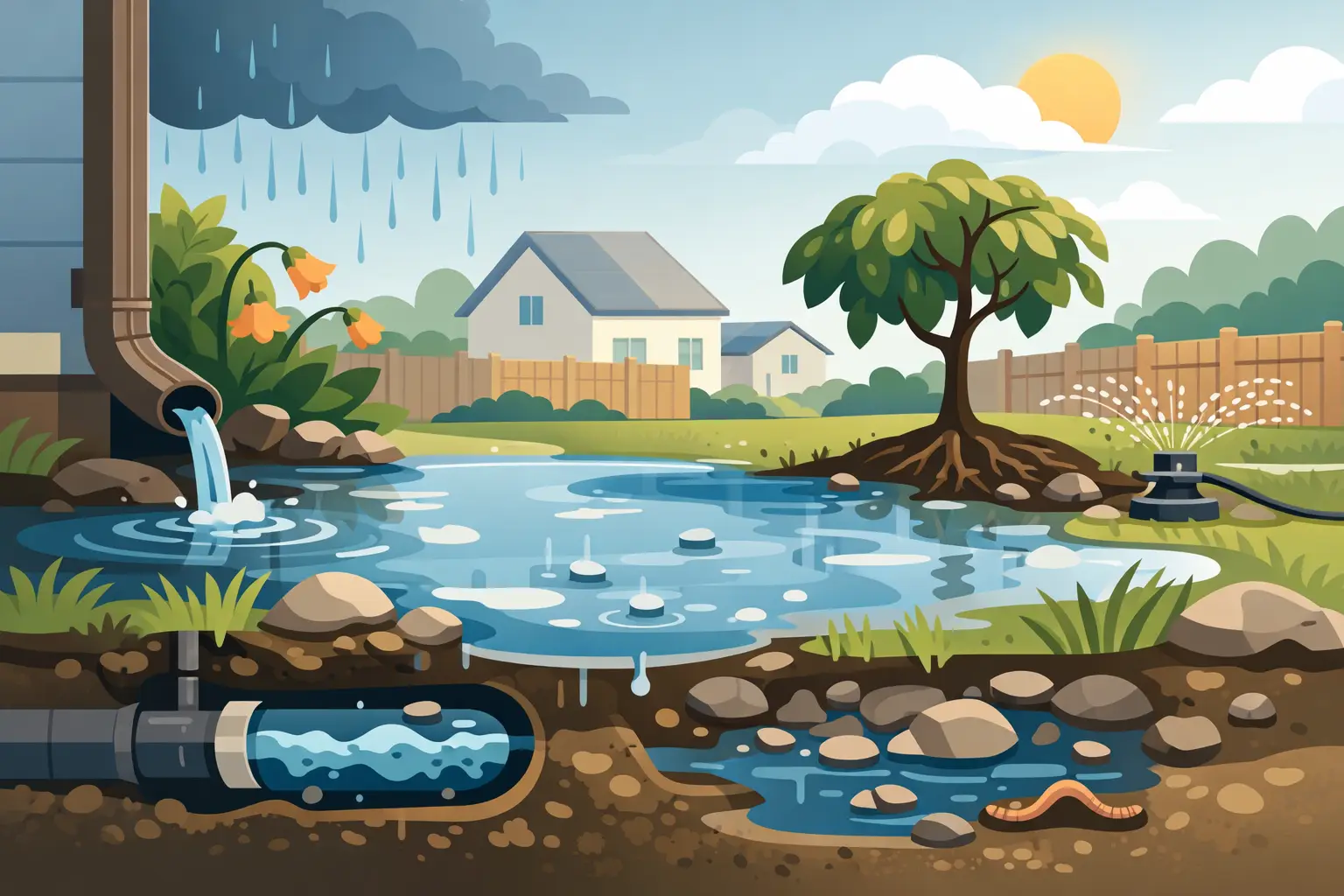
A yard that stays wet days after a normal rain is more than an inconvenience. If you’re asking, “why is my yard soggy,” you’re usually seeing an early sign that water is not moving through or away from your property the way it should. In East Texas, that can turn into muddy grass, mosquito problems, foundation concerns, and outdoor spaces that never feel usable.
Some soggy yards have one clear cause. Others have two or three issues working together, like heavy clay soil, poor grading, and runoff from a neighboring area. The right fix depends on what is actually holding water in place, not just where the puddle shows up.
Why is my yard soggy even when it hasn’t rained much?
This is one of the most frustrating versions of the problem because it feels like the yard is staying wet for no obvious reason. In many cases, the ground is receiving water from somewhere else. That could be a downspout emptying too close to the house, runoff from a higher part of the property, or water moving underground and surfacing in low spots.
Sometimes the lawn is not truly flooded. Instead, the soil is compacted so tightly that even a small amount of water has nowhere to go. The surface feels soft and muddy, grass struggles, and foot traffic makes it worse.
In Tyler and surrounding East Texas communities, clay-heavy soil is often part of the story. Clay holds water longer than sandy soil, which means drainage can stay poor even after light rain. That does not always mean the entire yard needs to be rebuilt, but it does mean surface drying can take longer unless drainage is improved.
The most common reasons a yard stays soggy
Poor yard grading
Grading is one of the biggest factors in drainage. If the yard slopes toward the house, patio, fence line, or a low pocket in the lawn, water naturally collects there. You may notice puddles near the foundation, wet mulch beds, or grass that dies out in the same areas over and over.
A grading issue can be subtle. The yard does not need to look steep for water to move the wrong way. Even a slight dip can trap enough runoff to keep the area wet for days.
Compacted soil
When soil is compressed by foot traffic, mowing patterns, construction activity, or years of settling, it loses the pore space that helps water soak in. Instead of infiltrating the ground, rain sits on top or runs across the surface.
Compaction is common in family backyards, along side yards, and in places where equipment has been used. If the soil feels hard when dry and sticky when wet, compaction may be part of the problem.
Heavy clay soil
Clay soil is not automatically bad, but it does drain more slowly. In East Texas, that can create recurring wet spots, especially in flat yards. Water may eventually soak in, just not fast enough to keep the lawn usable.
This is where trade-offs matter. Adding topsoil alone usually does not solve a clay problem if the underlying grade and drainage path are still wrong. On the other hand, a full drainage system may be more than you need if the issue is limited to one section of the yard.
Low spots and settled areas
Yards change over time. Soil settles, landscaping shifts, and previous work can leave depressions that slowly become water traps. These low spots might be obvious puddles in the center of the lawn, or they may be hidden along fence lines and around hardscaping.
If one part of the yard is always greener, mushier, or slower to dry than the rest, it may simply be lower than the surrounding grade.
Downspouts and roof runoff
A surprising amount of water comes off a roof during a storm. If downspouts discharge too close to the house or into a part of the yard with nowhere to drain, the lawn can become saturated quickly.
This often shows up as soggy areas around corners of the home, near flower beds, or beside walkways. Homeowners sometimes focus on the wet grass when the real problem starts on the roofline.
Irrigation leaks or overwatering
Not every soggy yard is rain-related. Broken sprinkler heads, underground leaks, or watering schedules that run too often can keep the lawn wet even during dry weather.
If the area stays damp in a consistent pattern or seems worse near irrigation zones, it is worth checking the system before assuming the problem is all about drainage. A drainage solution will not help much if water is being added every day by mistake.
Runoff from neighboring property
Water follows elevation, not property lines. If your lot sits lower than a nearby yard, driveway, or undeveloped area, you may be receiving runoff every time it rains.
This can be tricky because the visible wet area is on your property, but the source is uphill. In that case, the fix may involve redirecting water before it reaches the lawn rather than only treating the puddle after it forms.
Signs your soggy yard is becoming a bigger problem
A wet yard can start as a nuisance and turn into property damage if it goes on long enough. Watch for standing water that lasts more than 24 to 48 hours after rain, mulch washing away, soil erosion, or bare patches where grass will not recover.
Other warning signs include water pooling near the foundation, damp crawl spaces, mildew odors, mosquito activity, and fencing that begins to lean as posts loosen in saturated soil. Retaining walls, patios, and walkways can also shift when the ground underneath stays overly wet.
These signs do not always mean a major reconstruction project is necessary, but they do mean the drainage issue should be addressed before the repair list gets longer.
How to figure out what is causing the problem
Start by paying attention during and right after a rain. Notice where the water enters the yard, where it flows, and where it stops. A puddle is often the final symptom, not the beginning of the problem.
Look at the downspouts first. If they empty beside the house into a flat bed or lawn, that is an easy thing to investigate. Then check whether the soggy area is lower than the rest of the yard or bordered by compacted paths, edging, patios, or fences that trap runoff.
It also helps to compare wet and dry weather patterns. If the yard is soggy only after storms, grading and runoff are likely suspects. If it stays wet during dry stretches, irrigation leaks, poor soil drainage, or underground water movement become more likely.
A simple shovel test can tell you a lot. If the top few inches are muddy but below that the soil is dense and sticky, clay and compaction may be slowing infiltration. If the hole fills with water quickly, drainage conditions may be more serious.
What usually fixes a soggy yard
The best solution depends on the cause. Regrading can help when water is flowing the wrong way. French drains or catch basins can collect and redirect runoff where low areas keep flooding. Extending downspouts may solve isolated wet spots near the house. Aeration and soil improvement can help if compaction is making a basically functional yard drain poorly.
Sometimes a combination works best. A yard with clay soil may still drain acceptably if the slope is corrected and roof runoff is moved farther away. A low spot may stop holding water once the surrounding grade is adjusted, without needing an elaborate drain system.
What usually does not work is treating the symptom alone. Filling a puddle with a little soil may help for a short time, but if the water source has not changed, the soggy area often comes back.
When to call a drainage professional
If you have tried basic fixes and the lawn still stays wet, it is time to get a closer look at the full property. Drainage problems rarely stay isolated. Water affects grass, hardscaping, fences, planting beds, and the long-term usability of the yard.
A professional can look at slope, runoff patterns, soil behavior, and how different outdoor features are interacting. That matters because the right answer for one yard might be grading, while another needs drainage installation or a broader landscape plan. At Cullz Outdoor LLC, that whole-property view is often what helps homeowners avoid patchwork fixes that do not last.
A soggy yard is frustrating, but it is also fixable. Once you know where the water is coming from and why it is staying put, you can make the space look better, drain better, and feel usable again.