
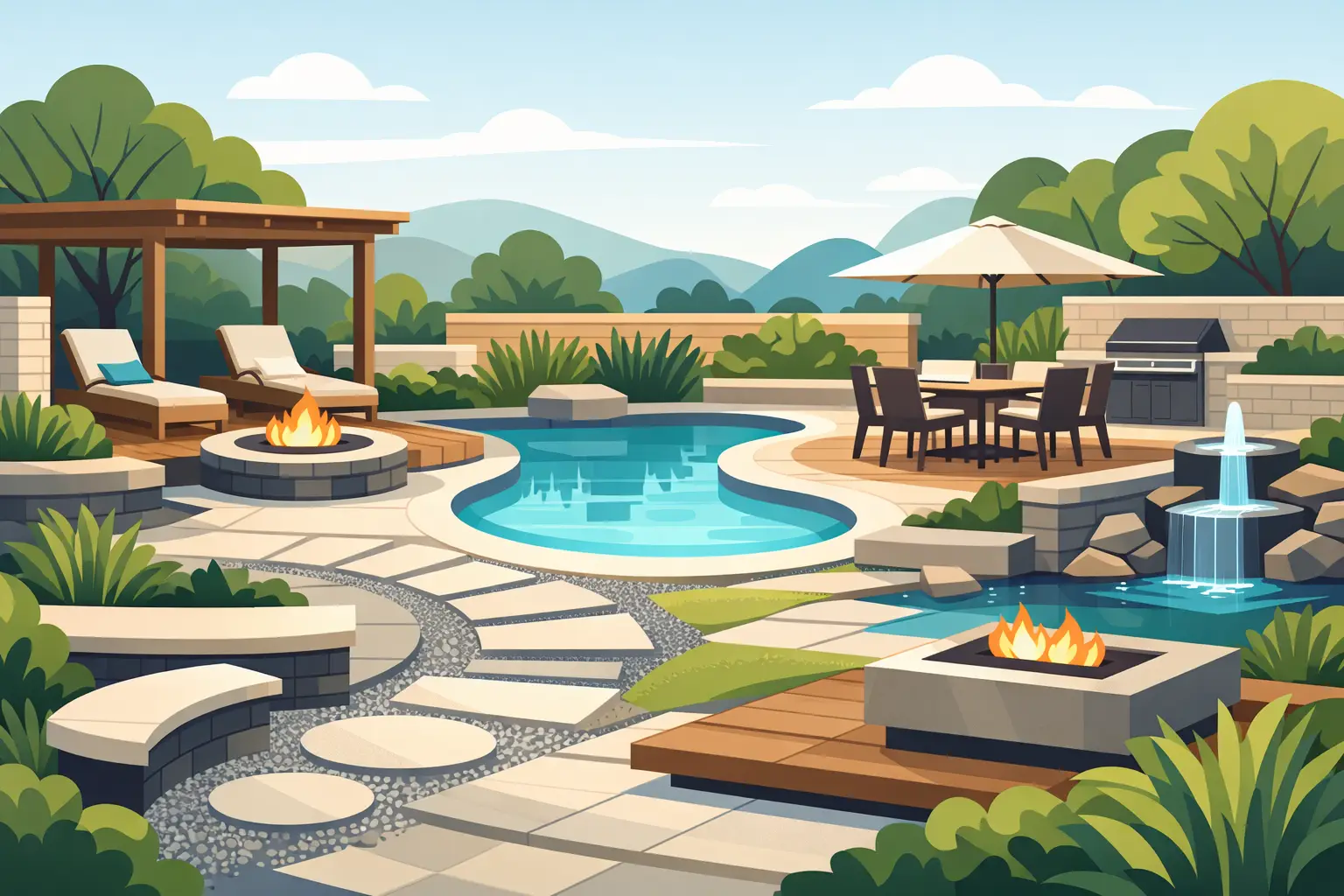
A backyard should not feel like a patch of grass you look at through the window. It should give your family a comfortable place to gather, grill, relax, and enjoy the property you work hard to maintain. The best hardscaping ideas for backyards create those usable spaces with surfaces and features built to handle East Texas heat, heavy rain, and everyday life.
Hardscaping is more than adding stone for appearance. Patios, walkways, retaining walls, fire features, and defined seating areas can solve real problems, including muddy traffic paths, sloped yards, poor drainage, and a lack of room for outdoor entertaining. The right design balances how you want to use the yard with what the property needs to perform well over time.
The Best Hardscaping Ideas for Backyards in East Texas
The strongest backyard projects start with a clear purpose. A small family that spends most evenings outside may get more value from a shaded patio and fire pit than a large decorative feature. A homeowner with a sloped lot may need retaining walls and drainage work before adding any furniture or planting beds.
Here are practical hardscaping ideas that can make a backyard more attractive, functional, and easier to maintain.
1. Build a Patio That Creates an Outdoor Room
A patio is often the foundation of a better backyard. It gives you a level, durable surface for a dining table, chairs, a grill, or a conversation area without worrying about mud, uneven ground, or worn-out grass beneath your feet.
Concrete, pavers, and natural stone can all work well, but each has trade-offs. Concrete can provide a clean, cost-conscious surface for larger spaces. Pavers bring more pattern and flexibility, while natural stone creates a more distinctive, custom look. The right choice depends on your budget, the style of your home, and how much maintenance you want to take on.
For a patio to last, the preparation underneath matters as much as the finished surface. Proper base work, grading, and drainage keep water from pooling near the home or shifting materials over time.
2. Add a Retaining Wall That Solves a Slope
A sloped backyard can limit how much of the property is usable. A properly built retaining wall holds soil in place and can turn an awkward incline into level sections for a patio, play area, garden bed, or lawn.
Retaining walls also create visual structure. A low wall around a patio can double as casual seating, while tiered walls can make a larger slope feel intentional rather than difficult to mow. Stone, block, and concrete wall systems offer different looks and price points, but every wall needs the right footing, backfill, and drainage plan.
This is not a feature to treat as decoration alone. Water pressure behind a wall is one of the main causes of failure. If runoff is already a concern in your yard, address drainage as part of the wall project instead of waiting for a problem to develop.
3. Use Paver Walkways to Protect Your Lawn
Many backyards develop the same worn path: from the back door to the gate, grill, shed, pool, or outdoor seating area. A walkway gives that route a finished appearance while protecting the lawn from foot traffic and reducing muddy shoes after rain.
Pavers are a popular choice because they can follow curves, frame planting beds, and complement patios without looking overly formal. A straight path works well for modern or simple layouts, while a gently curved walkway can soften a larger yard. Keep the path wide enough for comfortable use, especially if people will carry food, lawn equipment, or supplies along it.
A walkway can also guide water away from the house when it is installed with the correct slope. That detail is easy to overlook, but it makes a major difference during a Texas downpour.
4. Create a Fire Pit Area for Cooler Evenings
A fire pit gives people a reason to use the backyard after sunset and through the cooler months. It can be as simple as a clean paver pad with moveable chairs or as complete as a built-in stone feature with permanent seating.
Location matters. Keep the fire feature away from the house, fencing, low tree branches, and other combustible materials. Consider wind direction, too. A fire pit that regularly sends smoke toward the patio or back door will get less use than one placed with airflow in mind.
Built-in fire pits create a finished focal point, but they require more upfront investment. A dedicated gravel or paver seating area with a quality portable fire pit can be a smart option for homeowners who want flexibility or have a smaller budget.
5. Extend the Patio Into an Outdoor Cooking Area
If the grill is always pulled away from the wall and rolled back after every meal, an outdoor cooking area can make hosting easier. A hardscaped grilling station might include a stable pad, counter space, storage, lighting, and room for guests to stand without crowding the cook.
The best layout leaves enough circulation around the grill and keeps heat away from siding, fencing, and low-hanging structures. It should also be convenient to the kitchen, but not so close to the house that smoke becomes a nuisance. For homeowners who entertain often, a larger patio with separate cooking and seating zones makes the space feel organized instead of crowded.
This feature can grow in phases. Start with a properly sized patio and utility planning, then add counters, an island, or other upgrades when the time is right.
6. Turn a Wet or Uneven Area Into a Gravel Retreat
Not every backyard needs a large paved patio. A compact gravel seating area can turn an underused corner into a quiet spot for chairs, a bench, or a small dining set. Gravel works especially well in informal, natural-looking landscapes and can be more budget-friendly than a full paver installation.
The key is containment and preparation. Use strong edging so gravel stays where it belongs, install a stable base, and account for drainage before the material goes down. Without those steps, gravel can migrate into the lawn, develop ruts, or become difficult to maintain.
For East Texas properties with drainage concerns, gravel may be part of the solution, but it is not a substitute for a properly designed drainage system. The amount of water, soil conditions, and direction of runoff all matter.
7. Frame the Yard With a Privacy Fence and Hardscape Border
Privacy is one of the fastest ways to make a backyard feel more relaxing. While fencing is not hardscaping in the traditional sense, it works especially well alongside patios, retaining walls, and paved gathering spaces. Together, these features create a defined outdoor area that feels connected to the home.
A low stone border, raised planter, or narrow paver edge at the base of a fence can give the perimeter a cleaner, more finished appearance. It can also make mowing easier and protect fence posts from repeated contact with lawn equipment. Choose materials that complement the fence color, home exterior, and other hardscape features so the yard feels coordinated rather than pieced together.
Plan for Water Before Choosing Finishes
A beautiful patio will not stay beautiful if water drains toward the foundation, settles against a retaining wall, or washes out the base beneath pavers. Before selecting colors, patterns, or furniture, look at where water goes during a heavy rain.
Clay-heavy soil, uneven grades, and compacted areas are common challenges across East Texas. Sometimes the right project includes a combination of grading, French drains, catch basins, swales, or retaining walls. It depends on the property. A customized plan is more valuable than forcing the same feature into every backyard.
Working with one local team for hardscaping, drainage, landscaping, and fencing can also prevent conflicts between project phases. Cullz Outdoor LLC helps homeowners consider the full outdoor picture, so a new patio or wall supports the rest of the yard instead of creating another issue to solve later.
Choose Materials That Fit How You Live
Material selection should reflect more than appearance. Light-colored surfaces can feel cooler underfoot in direct sun, while darker stone may better hide stains around a grill or fire pit. Textured finishes add traction near pools and wet areas, though heavily textured materials can be harder to sweep.
Think about maintenance honestly. Natural stone offers character, but variations in color and shape may not suit every home. Pavers allow for repair by replacing individual units if needed, yet they need a well-built base to stay level. Concrete offers simplicity and durability, but cracks can be more visible and harder to blend into the design.
The best choice is the one that supports your daily routine, budget, and long-term plans for the property. A thoughtful hardscape does not need every available feature. It needs the right features, built correctly, in the places your family will use most.
Start by standing in your backyard after a rain and again at the time of day you would most like to be outside. Those two views will tell you a great deal about where your next outdoor improvement should begin.
Leave a Reply