
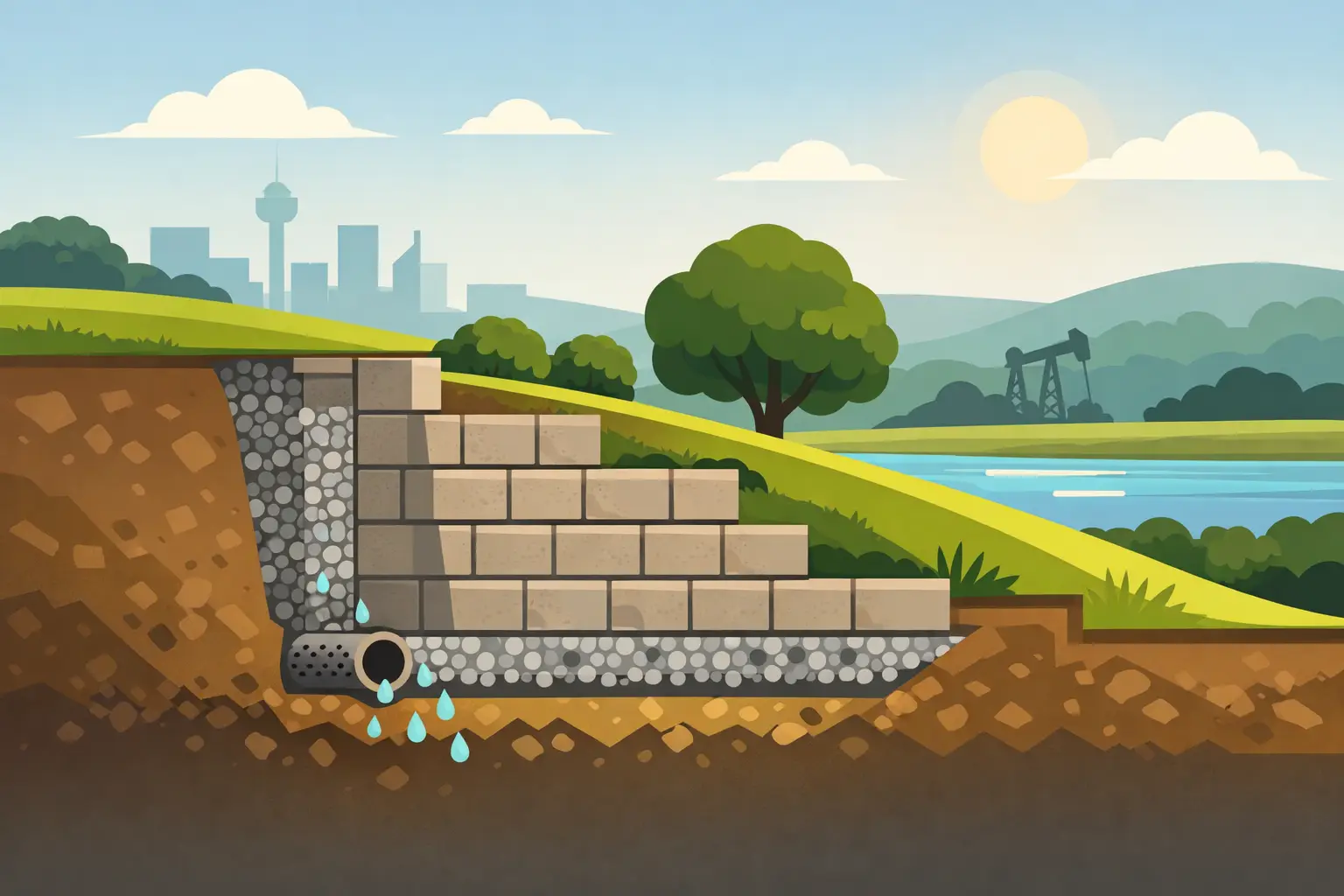
A retaining wall can look perfectly solid on the day it is built, then begin leaning, cracking, or bulging after a few hard East Texas rains. The hidden issue is often water. So, do retaining walls need drainage? In most cases, yes. Proper drainage is one of the most important parts of a retaining wall because it manages the water collecting in the soil behind it.
A wall is designed to hold back earth, but wet soil is much heavier than dry soil. When water has nowhere to go, it builds pressure behind the wall and pushes against the structure. Over time, even a well-built wall can be put under more strain than it was designed to handle.
Why Retaining Wall Drainage Matters
Rainwater naturally moves through the ground. When a retaining wall interrupts that path, water can collect in the backfill behind it. This creates hydrostatic pressure, which is the force water applies as it presses outward. It is one of the leading causes of premature retaining wall failure.
In Tyler and throughout East Texas, periods of heavy rain can quickly saturate clay-rich soil. Clay holds moisture longer than sandy soil, so water may remain behind the wall well after the rain stops. That extra weight can cause the wall to shift, separate at joints, bow outward, or crack.
Drainage also protects the soil beneath the wall. If water repeatedly washes through or around the base, it can erode supporting soil and create uneven settlement. A wall may not fail all at once. More often, the warning signs develop slowly until a small drainage issue becomes a much larger repair.
Do Retaining Walls Need Drainage for Every Project?
Nearly every retaining wall benefits from drainage, but the exact drainage system depends on the wall height, material, location, soil conditions, and slope of the yard. A short decorative border that holds back only a few inches of mulch may not need the same system as a four-foot wall supporting a sloped backyard.
Still, a wall that retains soil should not simply be built against compacted dirt and left to manage water on its own. Even lower walls can experience movement when they are exposed to repeated rainfall and poor grading. A thoughtful drainage plan is usually far less expensive than rebuilding a wall that has started to fail.
Walls over several feet tall, walls near driveways or homes, and walls that support a significant slope deserve particular attention. These projects may also need engineering, permits, or construction methods based on local requirements. The goal is not to add unnecessary materials. It is to build the right support system for the conditions on your property.
What a Proper Retaining Wall Drainage System Includes
A good drainage system gives water a clear path away from the wall instead of trapping it behind the structure. Several components work together to make that happen.
Gravel Backfill
Clean drainage gravel is typically placed behind the wall rather than using native soil alone. Gravel leaves open spaces for water to move downward, reducing the amount of water held directly against the wall. The depth of the gravel zone varies by project, but it should be planned as part of the wall construction, not added as an afterthought.
Perforated Drain Pipe
A perforated drain pipe, often called a French drain or footing drain in this application, is commonly installed near the base behind the wall. It collects water that filters through the gravel and carries it toward a suitable outlet. The pipe needs the proper slope so water moves through it instead of pooling inside it.
The outlet matters as much as the pipe itself. Water should be directed to a safe location where it will not return behind the wall, flood a neighbor’s property, wash out a planting bed, or create a soggy area near the home.
Filter Fabric
Landscape filter fabric can separate native soil from the drainage gravel. This helps prevent fine soil particles from clogging the gravel and pipe over time. Not every project uses fabric in exactly the same way, but the principle is consistent: keep the drainage path open and prevent sediment from reducing its effectiveness.
Surface Grading and Water Control
The ground above and around the wall should be graded to move surface water away from the retained area whenever possible. Gutters, downspouts, patio runoff, and uphill slopes can all send large volumes of water toward a retaining wall. If a roof downspout empties directly behind the wall, even a good drain pipe can be overwhelmed.
A complete solution may include extending downspouts, reshaping a slope, adding a swale, or installing a yard drainage feature that controls runoff before it reaches the wall.
Signs Your Existing Retaining Wall May Have a Drainage Problem
A drainage issue is not always visible from the start. Homeowners should keep an eye on changes after heavy rain, especially during the first few years after a wall is installed. Common warning signs include:
- A wall that leans, bows, or appears to move outward
- Cracks in blocks, stone, concrete, mortar joints, or caps
- Standing water, muddy soil, or water stains behind or beside the wall
- Soil washing out through joints, under the wall, or around the ends
- Separating sections, loose caps, or uneven settlement along the wall
These symptoms do not automatically mean the entire wall must be replaced. In some cases, correcting the drainage path, improving grading, or repairing a damaged section can help prevent further movement. The right recommendation depends on the condition of the wall and what is causing water to collect.
Drainage Mistakes That Can Shorten a Wall’s Life
The most common mistake is treating drainage as optional because it is not visible once the project is complete. A retaining wall may look great from the front while hidden water pressure builds behind it. Saving money on gravel, pipe, or a proper outlet can create a costly problem later.
Another issue is sending water toward the wall. This can happen when landscaping is changed after installation, when a downspout is redirected, or when a new patio alters the way runoff flows through the yard. A drainage plan should consider the entire outdoor space, not just the wall itself.
Using the wrong backfill can also cause trouble. Dense native clay packed directly behind a wall holds moisture and drains slowly. It may be readily available, but it does not perform like clean drainage gravel. Good construction balances appearance, strength, and water management from the ground up.
Retaining Walls and Yard Drainage Work Best Together
A retaining wall often solves one part of a property problem: it levels a slope, creates usable outdoor space, supports a garden area, or defines a patio. But if the underlying water issue is ignored, the wall can become the next place where water collects.
That is why it helps to look at retaining walls and yard drainage as connected projects. A customized plan can account for the grade of the property, the direction of runoff, soil conditions, nearby structures, and how the space will be used. For example, a backyard wall near a seating area may need drainage that remains effective without creating an exposed pipe or a wet spot where the family wants to gather.
Cullz Outdoor LLC approaches outdoor improvements with the full property in mind, helping homeowners create functional spaces that are built for local conditions rather than relying on a one-size-fits-all solution.
When to Ask for a Professional Assessment
If you are planning a new wall, the best time to address drainage is before construction begins. A site assessment can identify where water naturally flows, whether the yard needs grading changes, and where a drain outlet can safely discharge.
For an existing wall, do not wait until it has visibly collapsed. A new crack, a slight lean, or recurring wet soil after rain is reason to have the area evaluated. Early attention may protect the wall, your landscaping, and nearby improvements such as fences, patios, or walkways.
The best retaining wall is not just attractive on installation day. It stays straight, supported, and ready for years of rain because water has a planned place to go.
Leave a Reply