
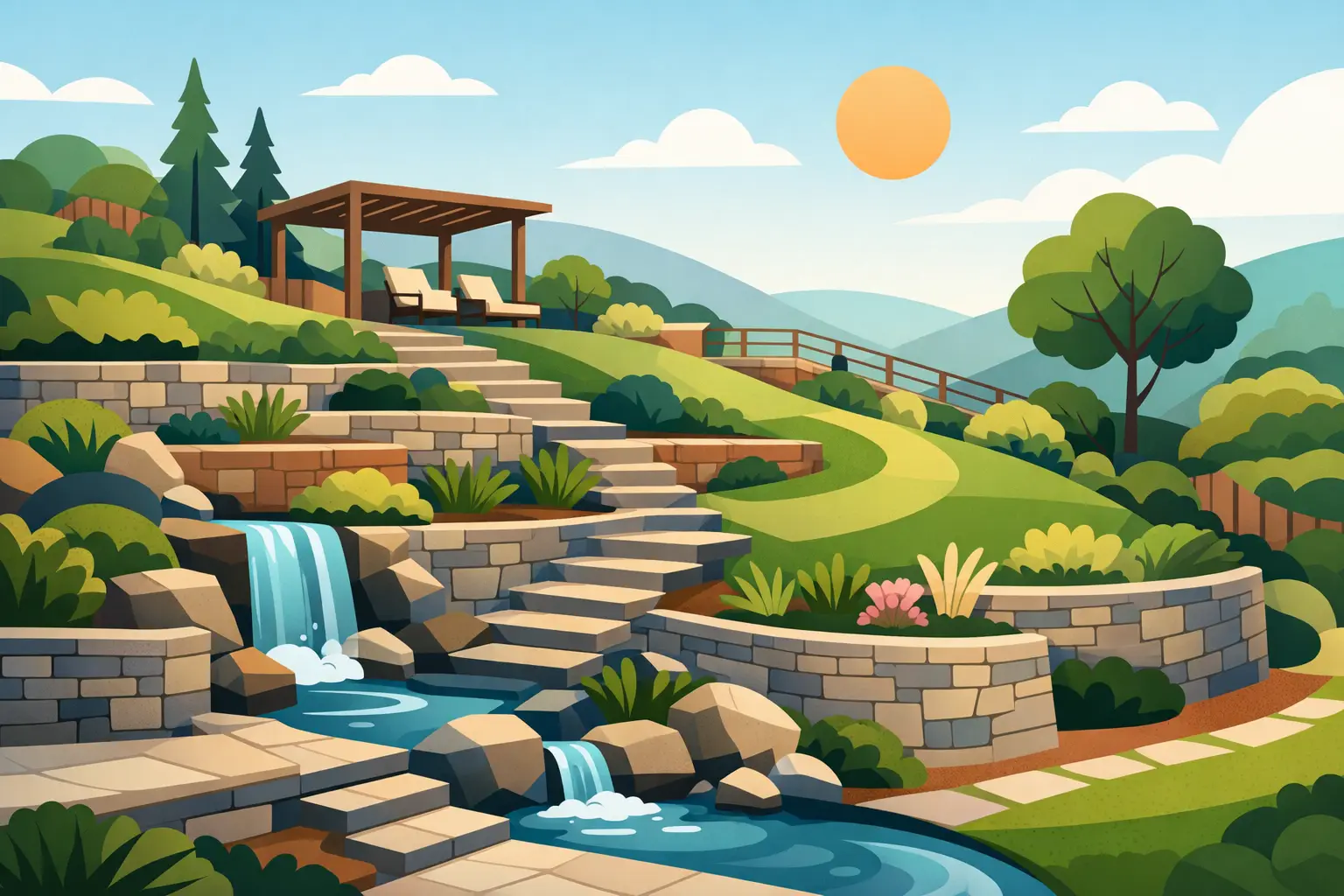
A sloped yard can turn a simple rainstorm into a muddy mess, wash mulch into the driveway, and leave part of the property too awkward to enjoy. The question, “how to landscape sloped yard,” is really about solving those problems without creating a costly maintenance burden later. Done well, a slope becomes a useful landscape feature with better drainage, stronger curb appeal, and defined outdoor living areas.
For homeowners in Tyler and across East Texas, the starting point is not picking plants or spreading rock. It is understanding where water moves, how steep the grade is, and what the space needs to do for your family.
Start With the Slope and Water Flow
Before changing the yard, walk it after a heavy rain. Look for water that runs toward the home, collects at the bottom of the hill, cuts channels through bare soil, or carries mulch and gravel downhill. These are signs that the property needs drainage planning before cosmetic landscaping begins.
A gentle slope may only need plant coverage, mulch, and a few small grade adjustments. A steeper slope, especially one near a patio, driveway, fence, or foundation, may need terracing or a retaining wall to hold soil in place. The right solution depends on the rise of the slope, the soil condition, and the amount of water the area receives.
East Texas clay soils add another consideration. Clay can hold water during wet periods, then become hard and compacted during dry weather. That cycle can put pressure on retaining walls, shift soil, and make runoff worse if water has nowhere controlled to go. Drainage should be part of the landscape design from the beginning, not an afterthought.
How to Landscape a Sloped Yard in the Right Order
The most reliable projects follow a simple sequence: control water, stabilize the soil, create usable levels where needed, and then add the finishing landscape materials. Reversing that order often leads to wasted work. Fresh plants, decorative stone, and new mulch do not solve erosion on their own.
First, direct surface water away from the foundation and away from areas where it can undermine soil. Depending on the property, that could involve reshaping a shallow swale, extending downspouts, installing a French drain, or routing water toward an appropriate discharge area. A drainage plan must consider the entire property, not just the visible problem spot.
Next, address bare and unstable soil. Exposed slopes erode quickly during storms, particularly before plants have time to establish roots. Erosion-control fabric, mulch, strategically placed stone, and deep-rooted plantings can help protect the surface. On steep grades, temporary stabilization may be necessary while construction and planting are underway.
Then decide whether the slope should remain a planted incline or become a series of level spaces. Keeping a gentle slope intact is often the more affordable choice. Terracing costs more up front, but it can create a safer, more functional backyard with room for seating, garden beds, play space, or a pathway.
Use Retaining Walls When the Grade Needs Structure
A retaining wall is not just a decorative border. It is a structural feature designed to hold back soil at a change in elevation. When installed correctly, it can turn a difficult hill into a clean set of landscape levels that are easier to maintain and enjoy.
Retaining walls work especially well when a slope is too steep to mow safely, when soil is moving downhill, or when a homeowner wants to expand a patio or create a flat lawn area. They can also protect nearby fences, driveways, and hardscape features from pressure caused by shifting soil.
The construction details matter. A durable wall needs a properly prepared base, correct block or material selection, drainage stone behind the wall, and a way for water to escape. Water trapped behind a wall is one of the most common causes of leaning, cracking, and failure. For taller walls or slopes affecting the home, driveway, or neighboring property, professional design and local requirements should be reviewed before work begins.
Natural stone, concrete wall block, and timber each create a different look and have different service lives. Concrete block is a practical choice for many residential projects because it offers consistency and strength. Natural stone can create a more traditional East Texas appearance, while timber may fit smaller, lower garden walls but is generally not the best choice for long-term structural retention.
Choose Plants That Hold the Hill Together
Plants are one of the most effective tools for stabilizing a slope, but only when they match the site. The best choices have spreading growth habits or strong root systems, tolerate the available sun, and can handle local rainfall patterns without constant attention.
For sunny slopes, ornamental grasses, native perennials, low-growing shrubs, and groundcovers can provide dependable coverage. For areas with partial shade, choose plants that can establish beneath trees without competing too aggressively for moisture. Grouping plants in larger drifts instead of scattering single plants across the hill makes the finished landscape look intentional and provides better soil coverage.
Avoid relying on high-maintenance turf for steep areas. Mowing across a slope can be unsafe, and mowing straight up and down may still be difficult on a sharp grade. A planted slope reduces weekly work while adding color, texture, and seasonal interest.
Mulch helps conserve moisture and protect soil, but it must be used thoughtfully. Lightweight mulch can float or wash downhill during a hard storm. On a steeper bed, use a mulch that knits together better, add edging at the bottom, or use a combination of plants and stone to keep material in place. Decorative gravel can also work, although it needs proper edging and a stable base so it does not migrate into lawn areas or drains.
Add Paths and Steps for Safe Access
If you need to walk across or up the slope, build a clear route instead of wearing a path into the dirt. Landscape steps, stone treads, pavers, or gravel paths can make the area safer and protect the soil from compaction and erosion.
The path should follow the natural grade when possible, with switchbacks or landings on larger slopes. Straight stairs can be attractive, but they may feel too steep if the run is long. Landings offer a place to pause and can break up the view with planters, low walls, or lighting.
A path also makes maintenance easier. You can reach plants, clean drainage areas, and inspect retaining walls without walking on wet or unstable soil. If the route is used after dark, low-voltage landscape lighting adds practical safety and improves the appearance of the yard at night.
Build Outdoor Space in Levels
One of the biggest benefits of landscaping a slope is the opportunity to create distinct outdoor zones. A lower terrace may become a patio for grilling and entertaining, while an upper level can hold a lawn, garden, or quiet sitting area. The transition between those spaces can be defined with walls, steps, planting beds, or fencing.
Do not try to flatten every inch of the property. Full regrading can be expensive and may create new drainage issues if it is not carefully planned. Often, the better approach is to level the area you want to use and let the remaining grade become a planted feature.
Think about sightlines as well. A terraced yard should look connected from the home, not like a collection of unrelated projects. Repeating similar stone colors, plant palettes, edging materials, and fence finishes helps the landscape feel planned from top to bottom.
Know When to Bring in a Professional
Small planting beds on a mild slope can be a manageable homeowner project. Larger grade changes are different. If water reaches the foundation, a slope is actively eroding, a wall needs to support significant soil, or the work affects a driveway or fence line, professional help can prevent expensive corrections later.
A local outdoor contractor can assess drainage, soil movement, access for equipment, wall placement, and the practical ways your family wants to use the yard. Cullz Outdoor LLC helps East Texas homeowners combine drainage solutions, retaining walls, landscaping, fencing, and hardscaping into one coordinated plan instead of treating each issue separately.
The best sloped-yard landscape does more than look finished on installation day. It sends water where it belongs, stays stable through changing weather, and gives your property another space worth using for years to come.
Leave a Reply