
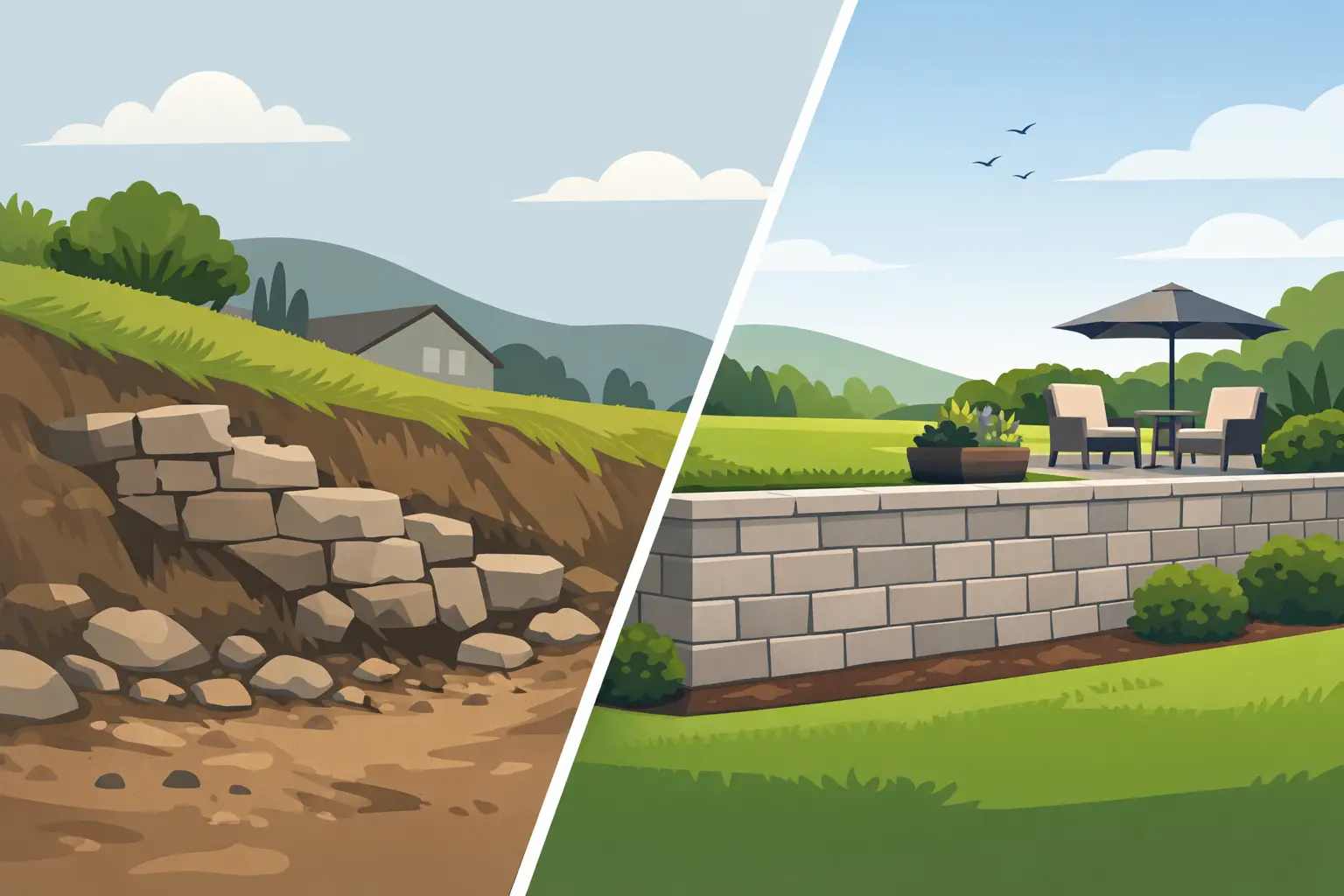
A retaining wall before after transformation is often more than a curb appeal upgrade. On many East Texas properties, the “before” is a sloped, washed-out, or hard-to-mow section of yard that limits how the space can be used. The “after” can mean a safer grade, cleaner landscape lines, better drainage control, and a backyard that finally has room for family time, gardening, or outdoor entertaining.
The difference is easy to see in photos, but the best retaining wall projects solve problems below the surface as well. A wall should look like it belongs with the home while doing the structural work needed to hold soil, manage water, and protect the surrounding landscape.
What Changes in a Retaining Wall Before After Project
A failing slope tends to announce itself slowly. Soil may collect at the bottom of a hill after a storm. Mulch can wash into the lawn. Garden beds lose their shape, and grass becomes difficult to cut safely or evenly. In some cases, water starts moving toward a patio, driveway, fence, or foundation instead of away from it.
After a properly designed wall is installed, that uneven section of land becomes intentional. The wall creates a defined elevation change, holding back soil so the area above and below it can be landscaped, planted, or used more effectively. Even a modest wall can make a front entry bed look more polished or give a backyard a clear edge between lawn and seating space.
For homeowners, the visual change matters. A crisp retaining wall can frame a home, complement fencing, and add the finished look that a loose slope or eroded bed cannot provide. But appearance should follow function. A beautiful wall that lacks a stable base or drainage plan may shift, lean, or fail long before it should.
More usable outdoor space
Sloped lots can leave homeowners with plenty of square footage but little level ground. A retaining wall can terrace the yard, turning a steep or awkward area into flatter sections that are easier to enjoy. Depending on the property, that may create space for a patio extension, play area, flower bed, seating area, or a more manageable lawn.
Not every slope needs a tall wall. Sometimes a series of lower, stepped walls fits the grade better and creates a more natural transition through the landscape. The right approach depends on the amount of elevation change, the soil conditions, and how the homeowner wants to use the space afterward.
Better control of water and erosion
Water is one of the biggest reasons retaining walls need careful planning in Tyler and across East Texas. Heavy rain can move quickly across a sloped yard, carrying soil and mulch with it. If water builds up behind a wall with nowhere to go, hydrostatic pressure can push against the structure and cause serious damage.
A lasting installation accounts for drainage from the start. That may include a compacted gravel base, drainage stone behind the wall, drain pipe, outlets, and grading that directs water away from vulnerable areas. The exact system varies by site, but drainage is never an optional finishing touch. It is part of what makes the after photo continue to look good through changing weather.
The Work Behind a Lasting Retaining Wall After
The finished blocks or stone are only the visible layer of a retaining wall. The work that determines performance begins with site preparation. The installation area needs to be evaluated for slope, soil movement, water flow, access, nearby structures, and the wall’s intended height.
A strong wall starts on a level, compacted base. If the base is uneven or poorly prepared, the wall can settle differently from one end to the other. Proper excavation also matters because the first course of blocks typically needs to be set below grade for stability and a clean finished appearance.
From there, each course should be aligned, leveled, and built according to the selected material and wall design. Taller walls or walls carrying added weight from driveways, structures, or steep grades may require reinforcement, engineering, permits, or additional construction measures. This is where a one-size-fits-all approach can become expensive.
At Cullz Outdoor LLC, the goal is to match the retaining wall solution to the property rather than force every yard into the same design. A low landscape border and a structural wall supporting a significant slope have different requirements, budgets, and construction needs.
Material choice affects the final look
Retaining wall blocks are a popular choice because they provide a clean, consistent appearance and are available in colors and textures that work with many homes. Natural stone can create a more rustic or organic feel, while certain concrete options may suit modern landscaping and defined outdoor living areas.
The best material is not always the most expensive one. It should fit the home’s style, the scale of the wall, and the level of maintenance the homeowner expects. A small garden wall may call for a different finish than a wall designed to hold back a major grade change near a driveway or patio.
Color also has an outsized effect. Warm earth tones often blend well with East Texas brick, stone, and natural greenery. Darker materials can give a yard strong definition, while lighter shades may brighten a shaded area. Looking at samples next to the home, fence, and existing hardscape helps avoid a finished wall that feels disconnected from the rest of the property.
Signs Your Yard May Need a Retaining Wall
Not every uneven yard requires a retaining wall, and a wall is not always the first answer to a drainage problem. Some properties benefit more from grading, a French drain, swales, or changes to downspout discharge. Still, a retaining wall is worth considering when the grade itself is contributing to erosion, poor drainage, or limited use of the yard.
Common signs include soil washing down a slope after rain, mulch repeatedly leaving landscape beds, a hill that is difficult to mow, exposed tree roots, or water collecting near the home. A leaning old wall, cracked blocks, separated capstones, or visible gaps behind an existing wall also deserve attention before the damage spreads.
The location matters as much as the symptom. A wall near a home foundation, pool, driveway, fence line, or neighboring property needs careful layout and drainage planning. Addressing the issue early can often protect more of the surrounding landscape and prevent a smaller concern from becoming a larger repair.
Planning for Results You Can Enjoy
The strongest retaining wall projects begin with a clear purpose. Decide whether the primary goal is erosion control, more level yard space, improved drainage, a better-looking landscape, or a combination of these needs. That conversation guides the wall’s height, placement, material, and connection to other improvements such as fencing, planting beds, sod, walkways, and drainage work.
It also helps to think beyond the wall itself. Once the slope is stabilized, the area may need fresh grading, new grass, mulch, plants, or a drainage solution to complete the transformation. Planning those pieces together creates a more cohesive result than installing a wall and leaving the surrounding yard unfinished.
A retaining wall should make a property easier to live with, not simply give it a new edge. When the design respects the land, directs water where it needs to go, and fits the character of the home, the after is not just more attractive. It is a yard that works better every time the weather changes and every time your family steps outside.
Leave a Reply